



Where Canada's defence debate goes next
After years of debate, Canada has accepted that defence spending must rise to meet a more demanding NATO and global security environment.

Patrick Gill
Share:




After years of debate, Canada has accepted that defence spending must rise to meet a more demanding NATO and global security environment.
Allies have welcomed Canada’s renewed commitment toward NATO spending targets. But as expectations across the alliance continue to rise, a harder question is emerging: does Canada currently have the industrial capacity, procurement systems and economic coordination required to deliver?
Settling the spending debate forced a long-overdue reckoning with how seriously Canada treats collective defence. But agreeing on a spending target does not resolve the more important question underneath it: what, exactly, is that money supposed to build?
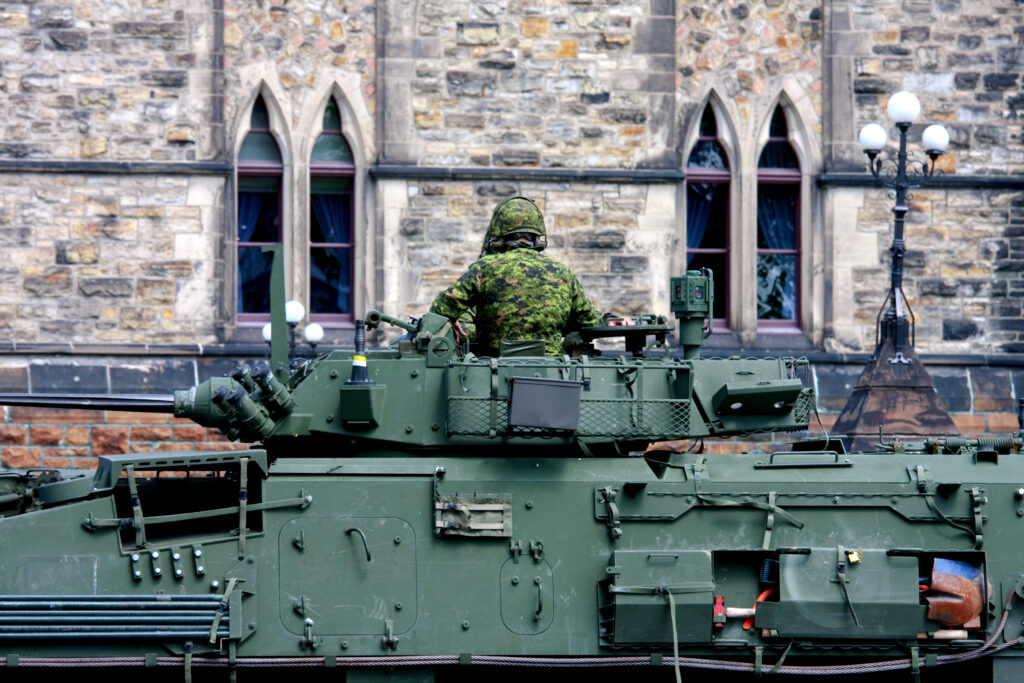
That is one of the central questions explored in forthcoming research from the Canadian Chamber of Commerce Business Data Lab on Canada’s defence economy and innovation ecosystem.
Canada has many of the ingredients of a credible defence-industrial base: advanced manufacturing capacity, globally competitive aerospace and cybersecurity firms, world-class research institutions and deep technical talent. The challenge is not whether Canada has assets. It is whether Canada can connect them into a durable industrial ecosystem capable of translating investment into long-term domestic economic advantage.
Why does Canadian intellectual property so often get commercialized elsewhere? Why do allied supply chains include Canadian components, but less often Canadian-owned ecosystems? Why do innovative firms struggle to scale domestically despite strong underlying capabilities?
These are not simply defence-sector questions. They are increasingly economic strategy questions.

Allied countries have been grappling with them for years. The United Kingdom, Germany and France, among others, increasingly treat defence procurement as industrial policy. Procurement decisions are linked to domestic production, commercialization pathways, workforce development, innovation systems and long-term industrial resilience. Military capability and economic capability are increasingly being treated as interconnected objectives.
Canada, by contrast, has often approached defence, industrial policy, innovation, infrastructure and economic development through separate policy silos. Whether that can change, and how quickly, is one of the central issues now facing the country.
For small and mid-sized businesses, which make up much of Canada’s defence-adjacent supplier base, the barriers are significant. Procurement timelines are long. Demand signals are uncertain. Even firms with globally competitive technologies often find it more practical to scale through U.S. or European ecosystems.
Yet the growth potential is evident. New BDL analysis of Statistics Canada’s Canadian Survey on Business Conditions finds that nearly 58% of businesses currently providing defence or cybersecurity goods and services plan to expand those activities over the next year.
The scale of what may be coming is significant. BDL analysis suggests annual defence spending could rise from roughly $64 billion today to approximately $160 billion by 2035 to align with evolving NATO expectations – a roughly 2.5x increase and a scale of investment large enough to reshape significant parts of Canada’s industrial economy.

Whether that investment translates into lasting Canadian economic capability, however, will depend heavily on how strategically it is deployed.
This broader conversation will also inform the work of the Canadian Chamber’s new Defence and Security Committee, bringing together large firms, SMEs, financial institutions, researchers and industry leaders to examine the manufacturing, cyber, critical minerals, workforce and geopolitical implications of Canada’s evolving defence landscape.
As Canada debates the future of defence spending and sovereign capability, the more important question may ultimately be this: can the country build the industrial, innovation, procurement and institutional systems required to turn strategic investment into long-term economic strength?
That conversation is only beginning.
Other Blogs

Record Exports Signal a Broader Trade Story: Merchandise Trade May 2026

Canada’s economy starts the second quarter with firmer footing

The Inflation Gap Widens as Price Pressures Spread Beyond Energy: May 2026 CPI

Consumers Keep Spending, but the Menu Is Narrowing

The Bank of Canada faces a dilemma as it extends its holding pattern
Canada’s Trade Story Finds New Supporting Cast: Merchandise Trade April 2026

It is green across the board for May’s labour market: Labour Force Survey May 2026
Recession or Resilience? An unexpected first-quarter GDP contraction points to an uphill battle.