



Inflation cools ahead of the summer months
CPI June 2026

Andrew DiCapua
Share:




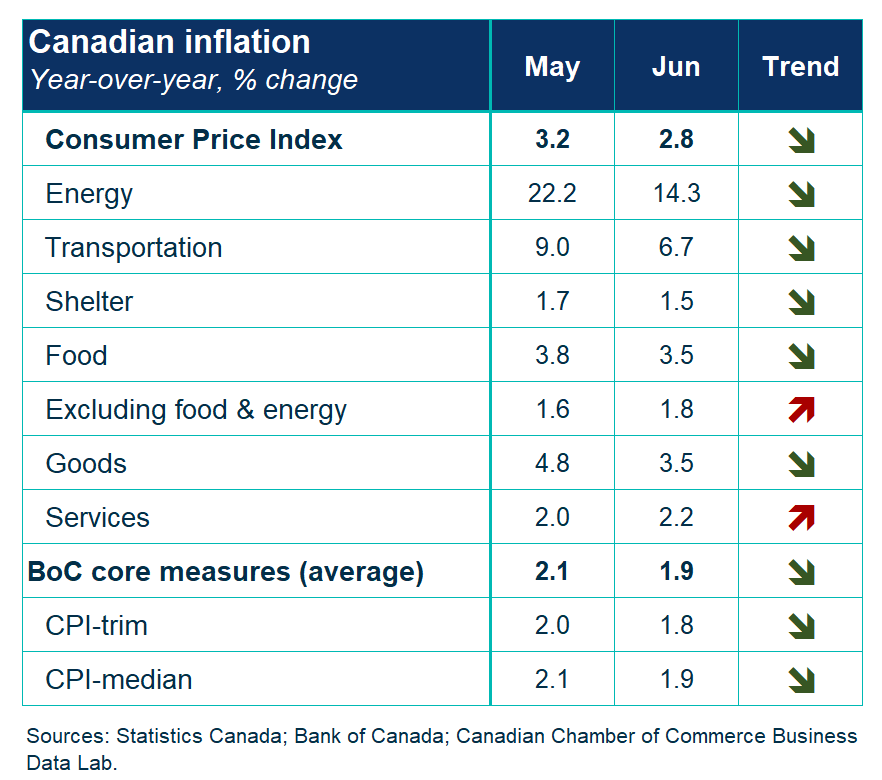
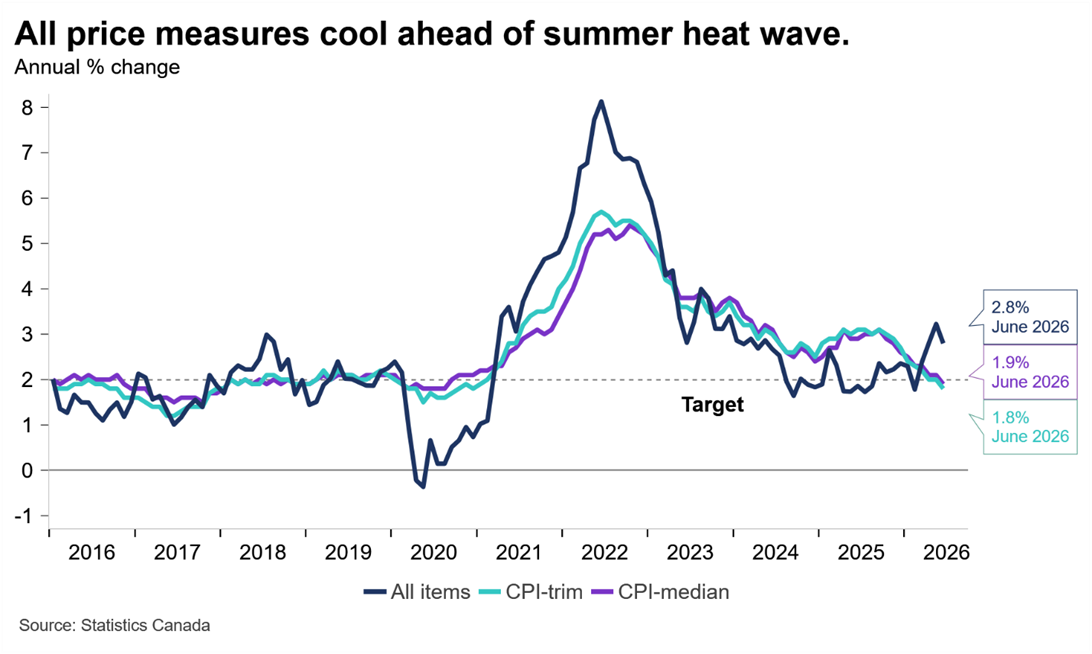
Despite the hot weather, June inflation cooled, offering Canadians a bit of relief. While lower gasoline prices drove much of the decline, the more important signal for the Bank of Canada is that underlying inflation also eased, with its preferred core measures now averaging below 2%. Higher energy costs still have not spread broadly across the economy. This report was marginally better than the Bank expected and further reduces the likelihood of a rate increase.
Key Takeaways
Canadian inflation cooled more than expected in June, with gasoline prices doing most of the heavy lifting. Headline CPI slowed to 2.8% from 3.2% in May. Prices fell 0.4% on the month, the largest decline since December 2024, and were down 0.1% seasonally adjusted.
More encouragingly, underlying inflation continued to soften. Core CPI measures averaged below 2% for the first time in nearly six years. This suggests that the energy shock has not spread broadly through the consumer basket and that excess capacity in the economy is still helping to contain prices.
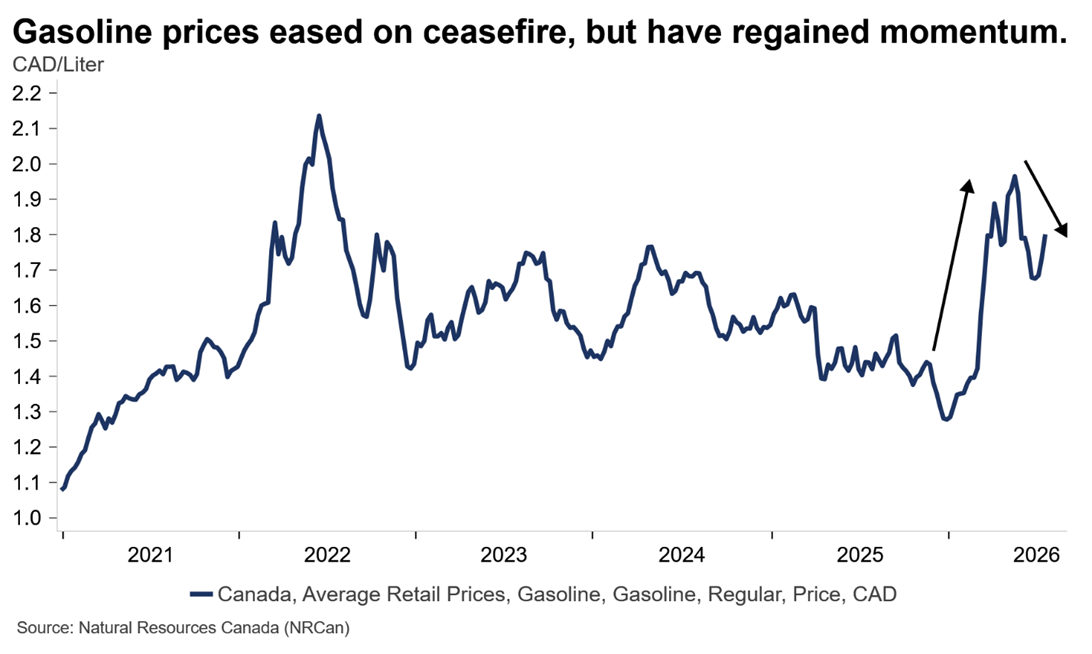
Gasoline prices dropped 10% in June as oil prices temporarily retreated on the news that the U.S. and Iran agreed on a ceasefire. Gasoline prices have since risen slightly and are 21% higher than a year ago. Excluding gasoline, inflation held steady at 2.2%.
Grocery inflation surprisingly eased to 3.9% from 4.3%, although it remains above headline inflation for more than a year now. Slower fresh fruit inflation is also welcome news. However, Canadians continued to pay more for groceries compared to restaurants.
Shelter inflation slowed further to 1.5% from 1.7%. Mortgage interest costs fell 0.3% from a year ago and homeowners’ replacement costs declined 2.4%, reflecting softer borrowing costs and housing activity. Rent inflation remained firmer at 3.5%.
The World Cup provided some upward pressure on accommodations with prices jumping 10.1%, led by Ontario and British Columbia, where Toronto and Vancouver hosted matches. Airfares rose 9.6%, travel tours increased 6.8% and rental vehicle prices were also up 6.8%.
Provincial overview
Inflation slowed in every province except Prince Edward Island, with lower gasoline prices driving much of the improvement. Ontario recorded the lowest inflation rate in the country at 2%, partly because of slower restaurant price growth. British Columbia came in near the national average at 2.8%, but price growth remained above 4% in Manitoba and Saskatchewan. Nova Scotia recorded the highest rate at 4.7%, largely because of higher traveller accommodation prices.
Implications
This is a marginally better result than the Bank of Canada expected. Based on the completed quarter, headline inflation averaged about 2.9% in the second quarter, slightly below the Bank’s 3% forecast in its July Monetary Policy Report. The average of CPI median and CPI trim was just below 2%.
The report supports the Bank’s view that the oil shock has so far been largely isolated rather than the beginning of a broader inflation problem. It further reduces the need for a rate increase, but it probably does not create an immediate case for a cut. Oil prices have risen again, geopolitical uncertainty remains high and the economy appears to have rebounded in the second quarter. For now, the Bank can remain on the sidelines.
Charts and Tables
Other Blogs

The Bank of Canada gains more confidence in growth prospects despite inflation risk

Canada’s labour market finally caught a bit of a break in June: Labour Force Survey May 2026
Record Exports Signal a Broader Trade Story: Merchandise Trade May 2026

Canada’s economy starts the second quarter with firmer footing

The Inflation Gap Widens as Price Pressures Spread Beyond Energy: May 2026 CPI

Consumers Keep Spending, but the Menu Is Narrowing
The Bank of Canada faces a dilemma as it extends its holding pattern

Canada’s Trade Story Finds New Supporting Cast: Merchandise Trade April 2026