




Canada Needs More Than “Steady”
Key Findings from Business Insights Quarterly (Q1 2026)

Business Data Lab
Share:




Canada’s economy is holding steady, but the underlying signals point to a business environment that is not yet set up for stronger growth.
Trade remains the defining pressure shaping business behaviour. Even a year after a wave of tariffs and trade disruptions, most firms are still adapting cautiously. With weak demand, persistent uncertainty and limited small business dynamism, the risk is not an abrupt downturn but a gradual erosion of Canada’s growth capacity.
Business outlook
Business outlook has been negative for the past seven consecutive quarters, highlighting a fragile outlook despite modest growth forecasts of 2.2% in 2026.
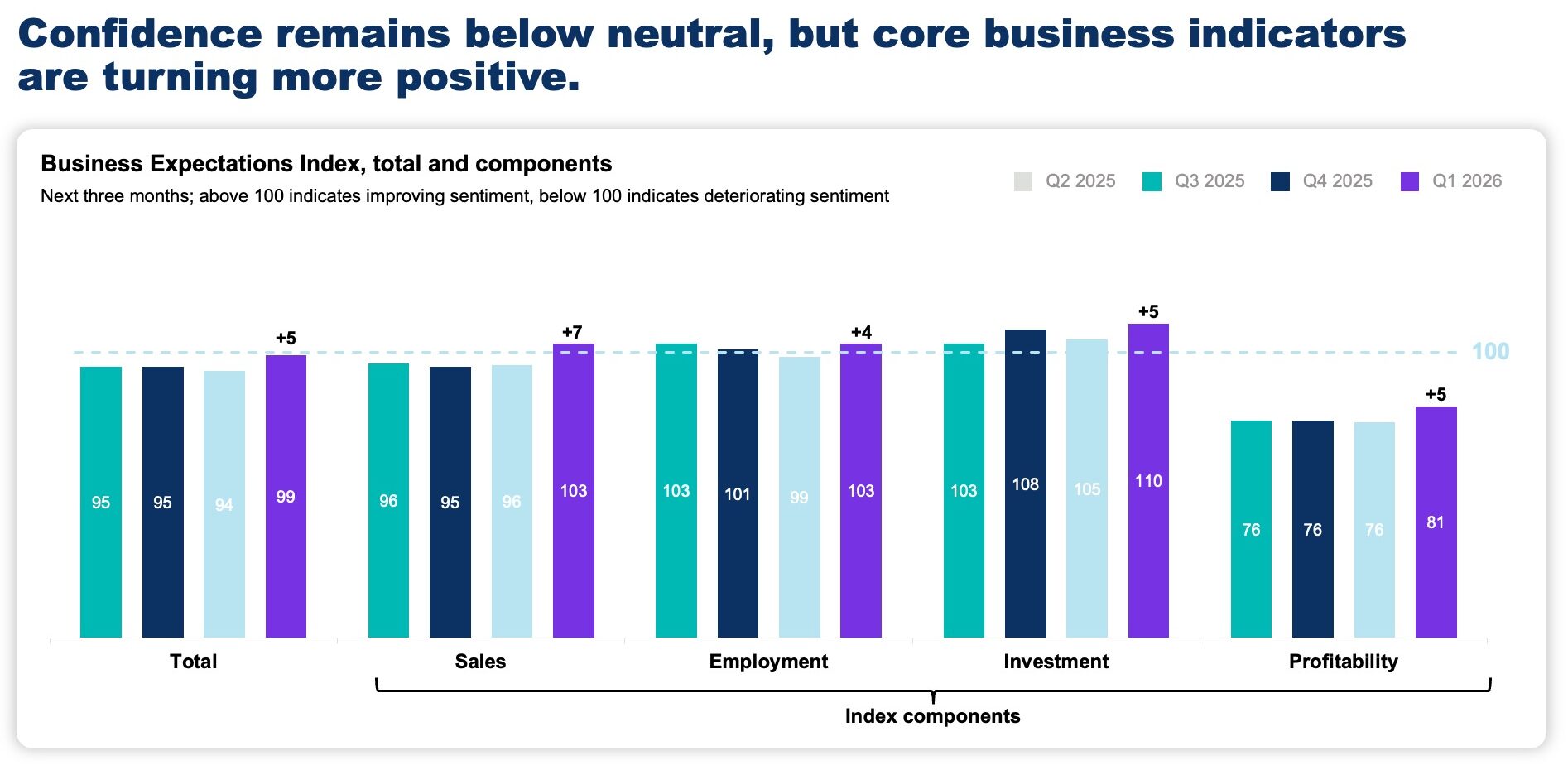
Note: Data collected January–February 2026 and does not reflect recent geopolitical developments and potential energy price impacts.
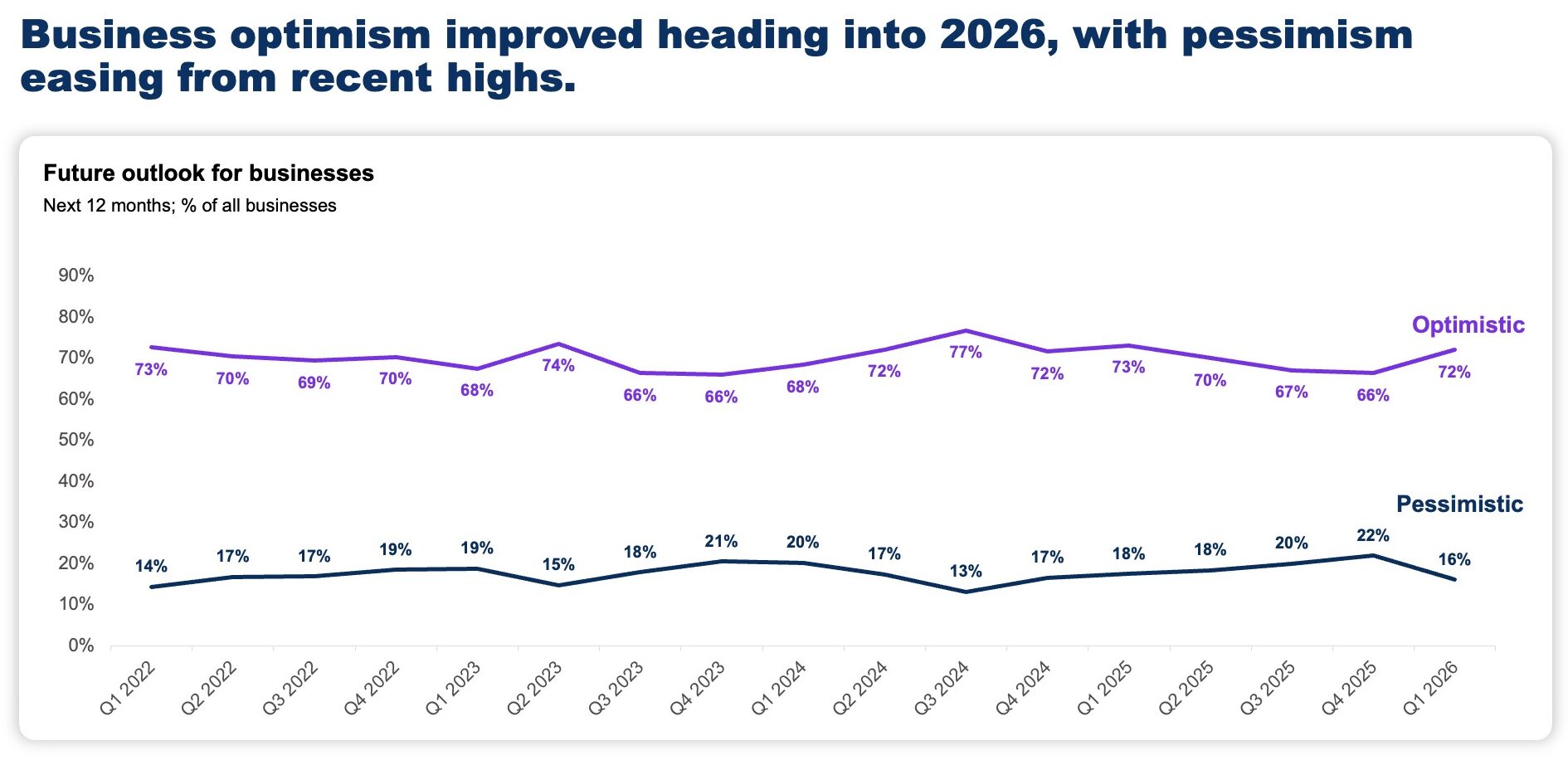
Source: BDL analysis using Statistics Canada’s Canadian Survey on Business Conditions.
Business obstacles
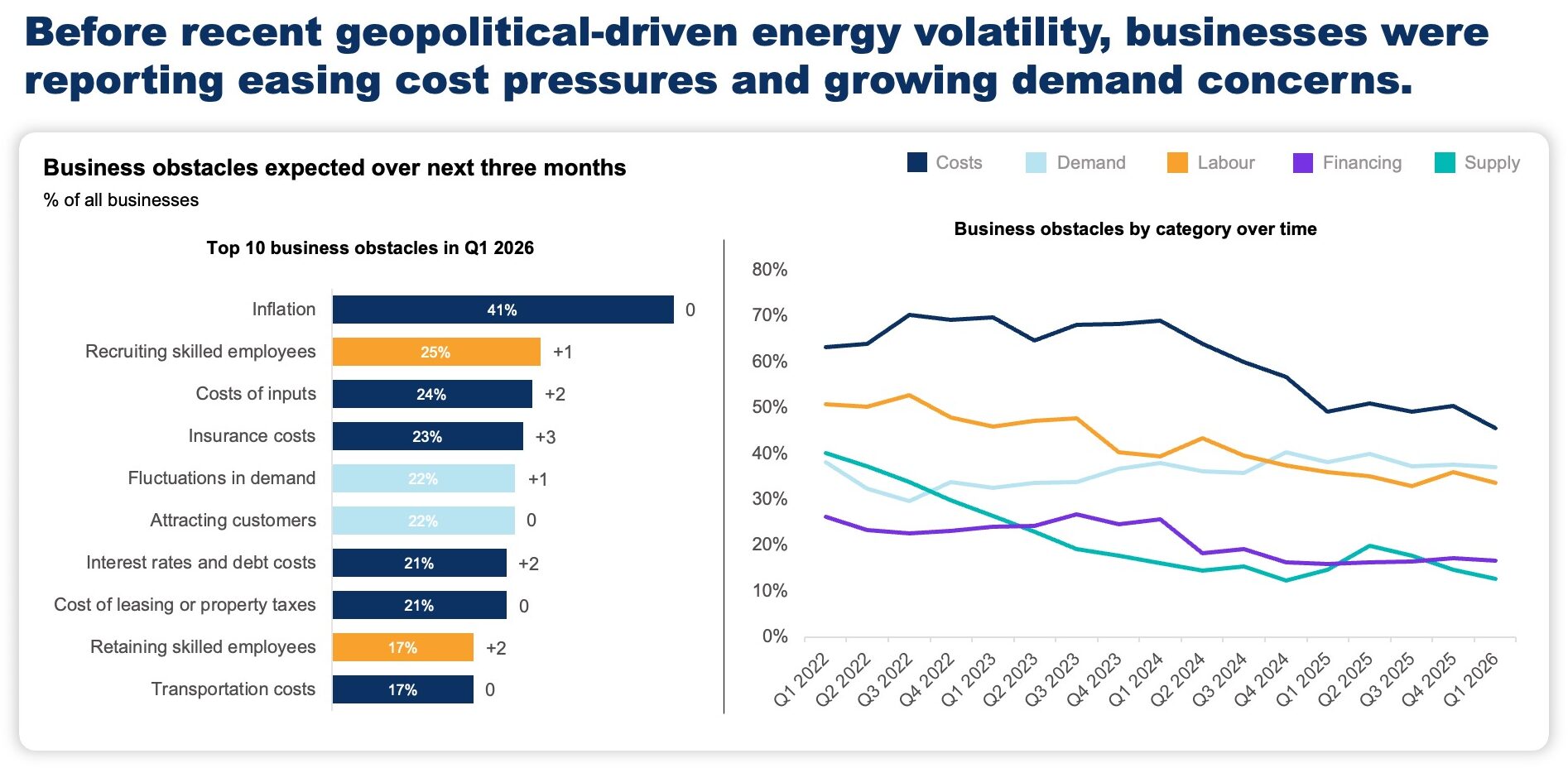
While cost and inflationary pressures are beginning to ease, they remain the leading obstacle for half of all businesses. Weak demand, not labour challenges, has emerged as the second‑largest barrier to growth, cited by over one‑third of firms.
Trade
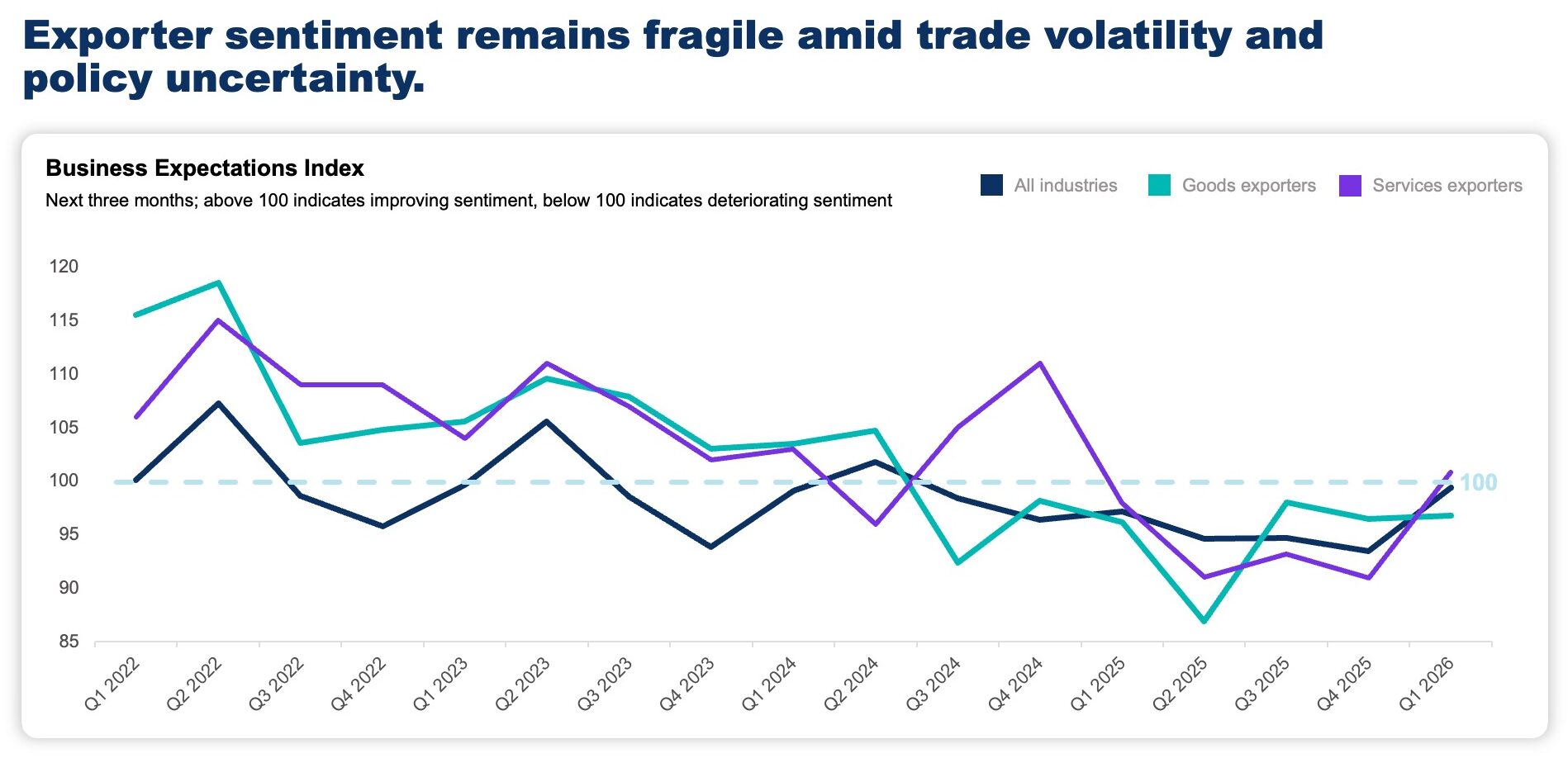
Goods exporters remain pessimistic amidst trade turmoil, hitting a seven-quarter streak.
Trade diversification
USMCA use remains at a 20-year high. The share of goods exports to the U.S. claiming NAFTA/USMCA tariff preferences rose from 67% in 2025 to 83% in February 2026.
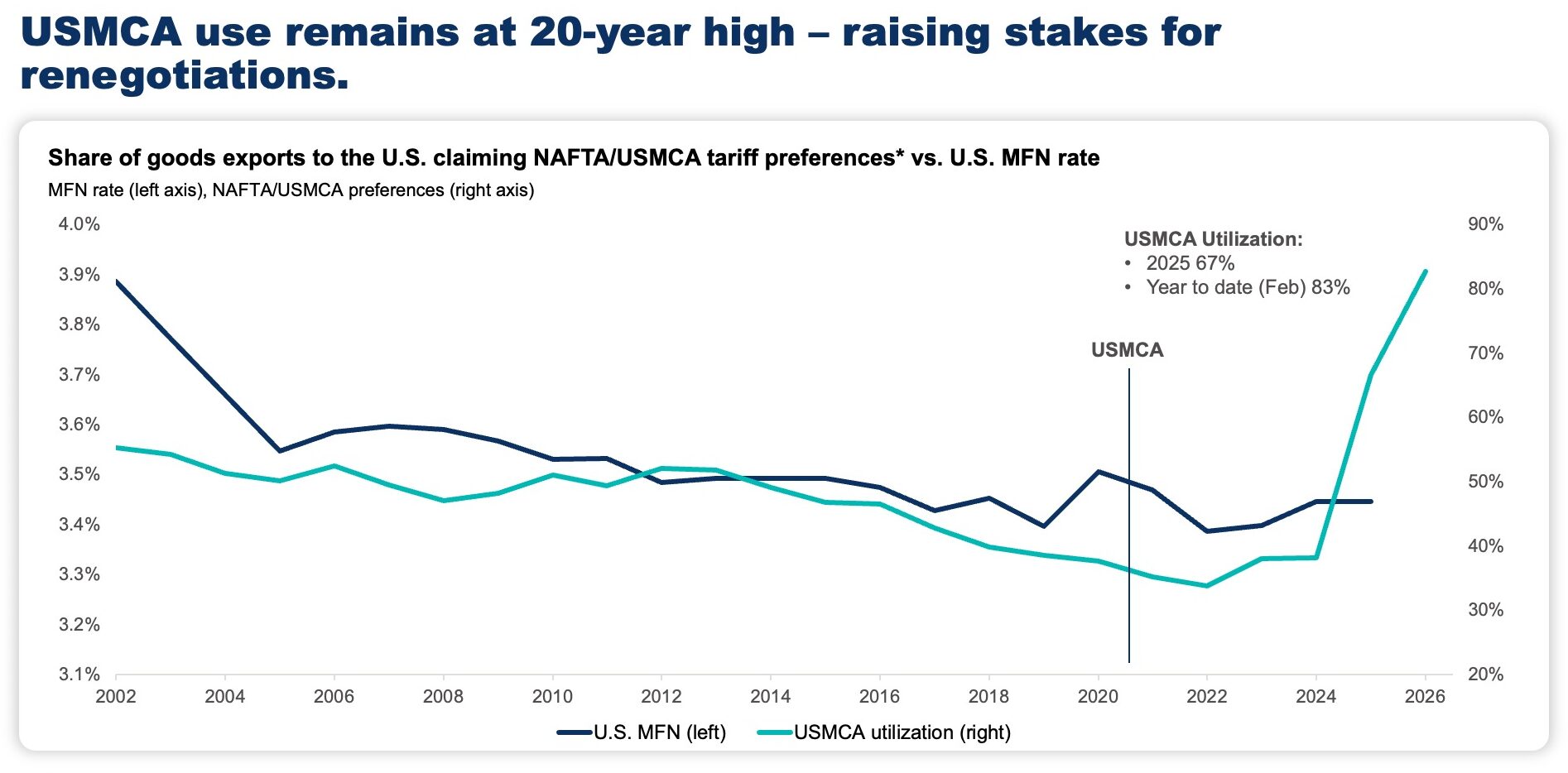
Note: *NAFTA utilization data shown through June 2020; USMCA utilization data from July 2020 onward. 2026 data is available through February, the most recent month of reporting.
Canada’s trade diversification is being driven by existing exporters doing more, not more firms exporting.
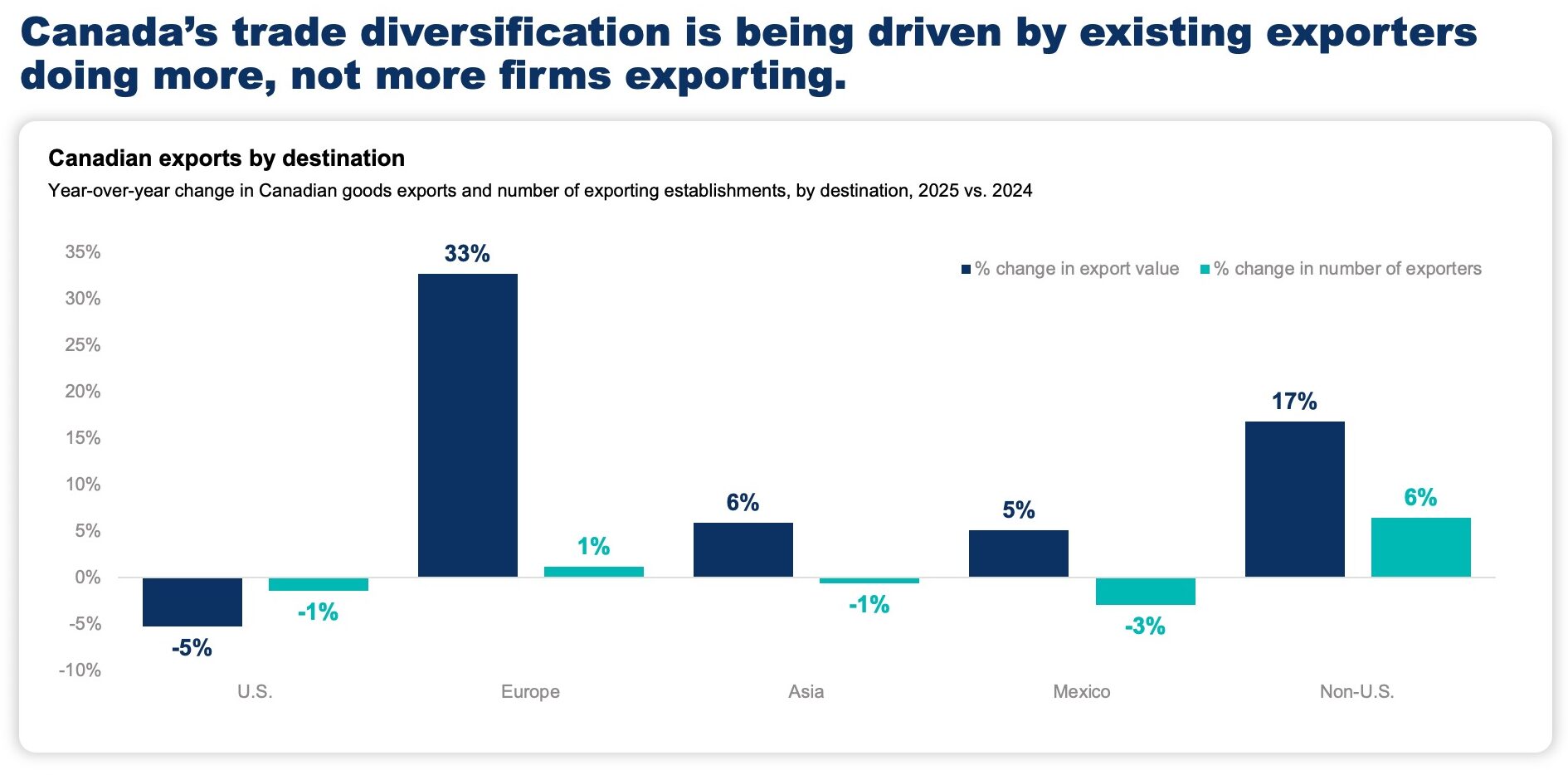
Note: Exporter counts reflect the number of establishments reporting exports; changes may reflect both market conditions and reporting thresholds.
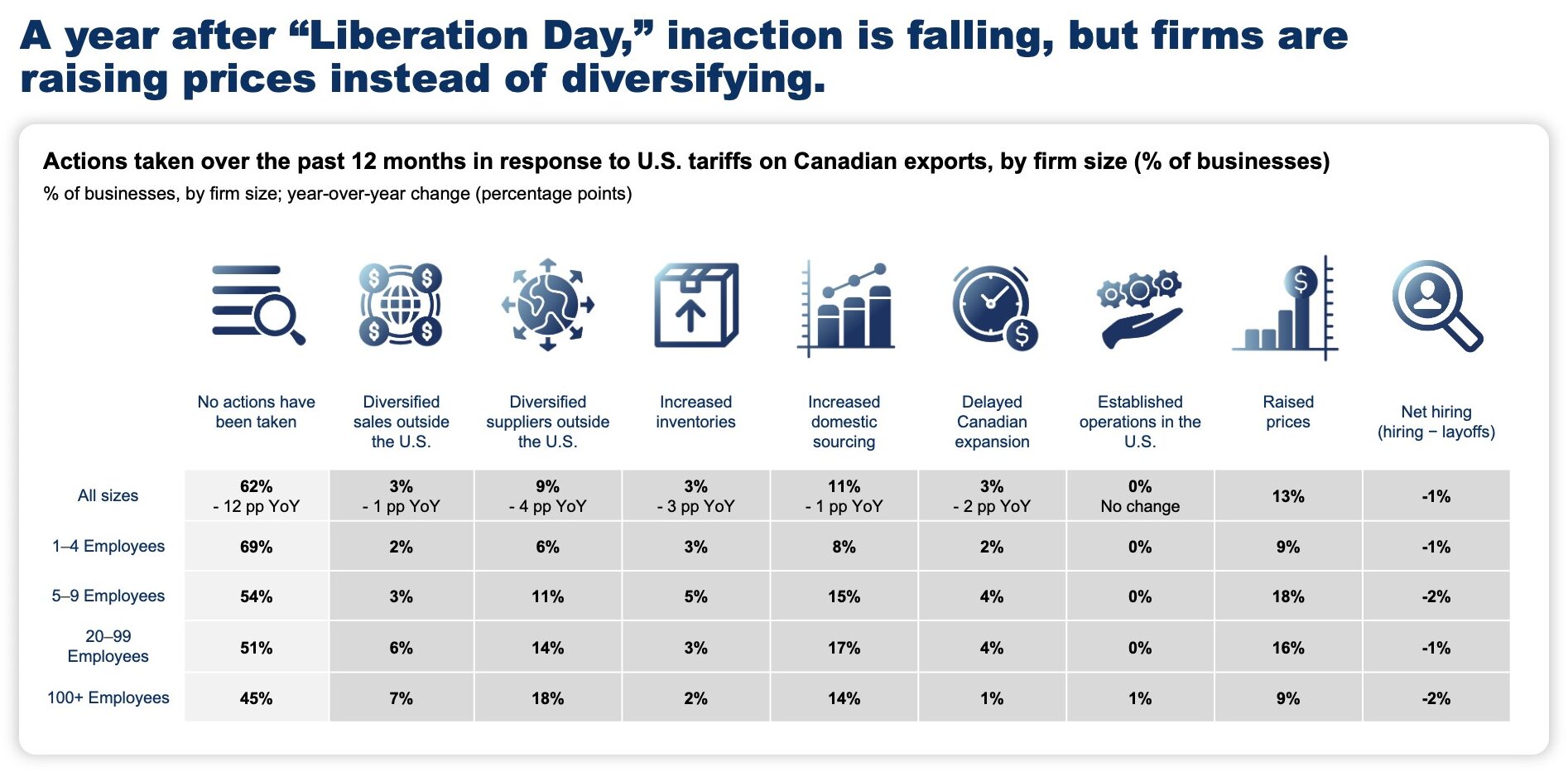
In this quarter, more organizations diversified their suppliers outside of the U.S. than their sales.
Labour market
Canada’s labour market is softening — there are more job seekers than there are available jobs, which gives employers more leverage.
Labour obstacles
Accommodation and food services, construction and retail trade have the highest percentage of businesses expecting labour obstacles over the next three months. In all three of these industries, more than a third of businesses expect difficulty recruiting skilled employees.
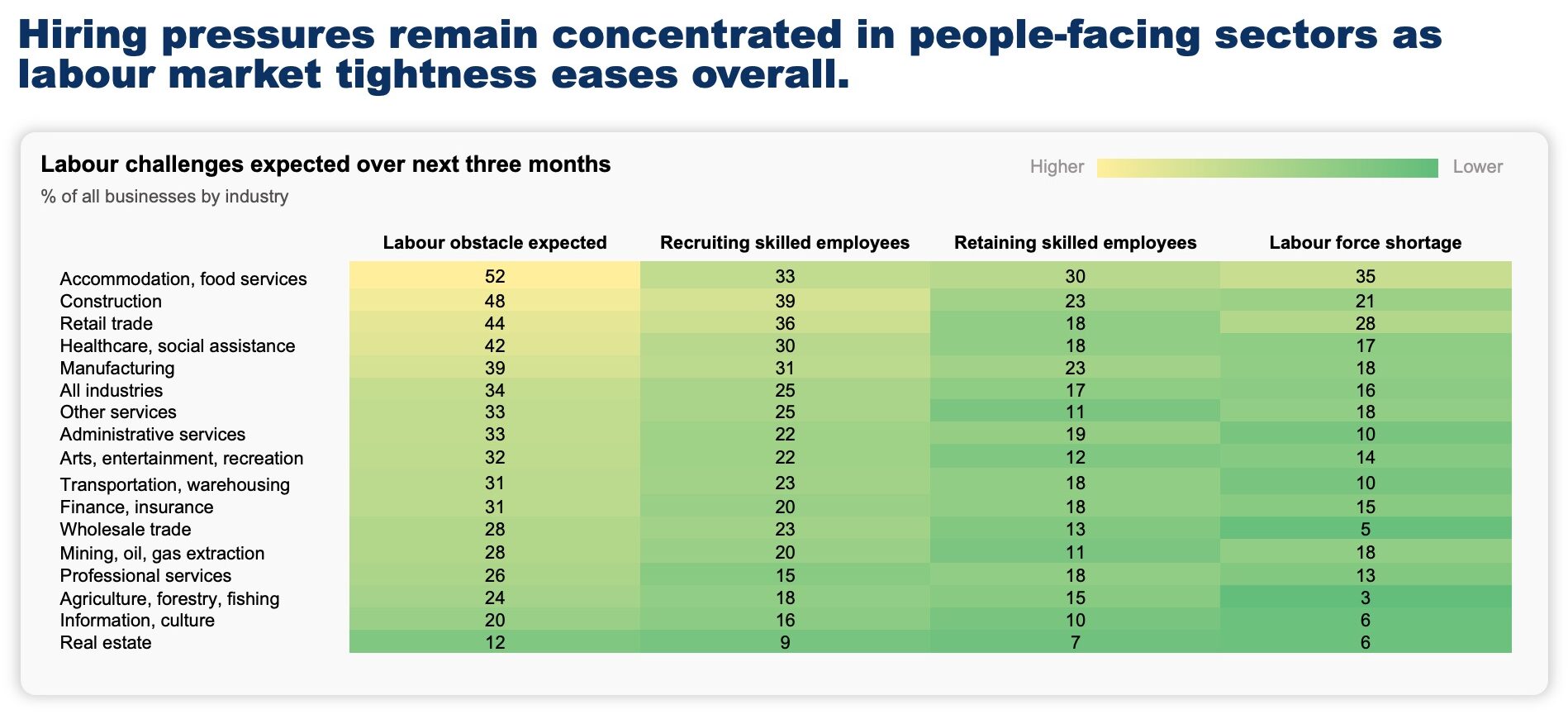
Nearly half of businesses in accommodation and food services and construction report having difficulty finding candidates with the top reason being low applicant interest.
Nearly half of businesses (46%) face skills gaps and are responding by training, not hiring.
- 40% of businesses are planning to do in-house training
- 20% are planning to use mentoring or coaching
- 13% are planning to use external training
Wage growth
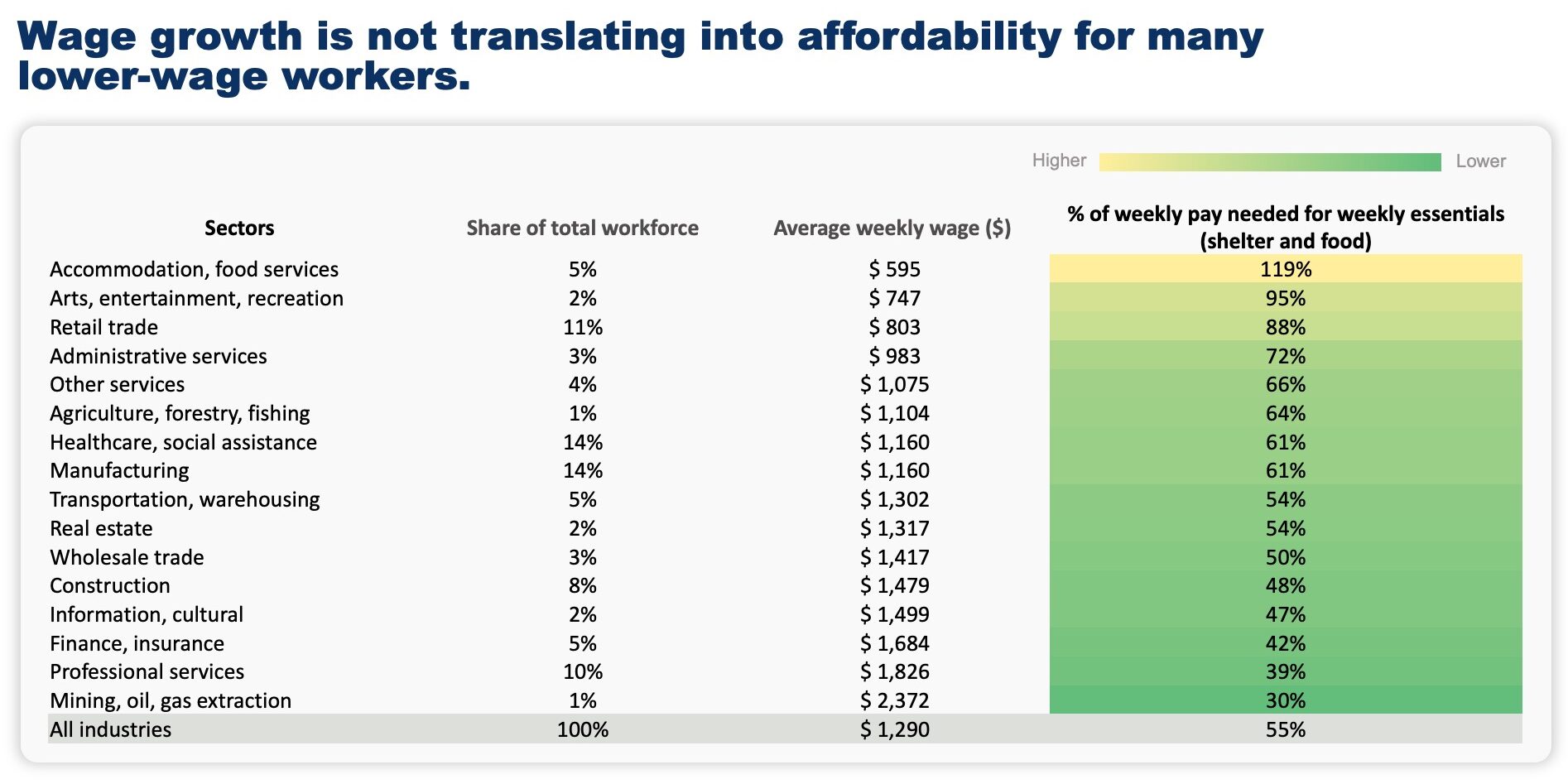
Even though wage growth is higher than pre-pandemic norms, it’s not translating into affordability for many lower-wage workers.
In accommodation and food services, 119% of the weekly average pay is needed for essentials, while 95% of the weekly average pay is needed in arts, entertainment and recreation.
Other Blogs

Canada’s labour market finally caught a bit of a break in June: Labour Force Survey May 2026

Record Exports Signal a Broader Trade Story: Merchandise Trade May 2026

Canada’s economy starts the second quarter with firmer footing

The Inflation Gap Widens as Price Pressures Spread Beyond Energy: May 2026 CPI

Consumers Keep Spending, but the Menu Is Narrowing

The Bank of Canada faces a dilemma as it extends its holding pattern

Canada’s Trade Story Finds New Supporting Cast: Merchandise Trade April 2026

It is green across the board for May’s labour market: Labour Force Survey May 2026