






CPI March 2026
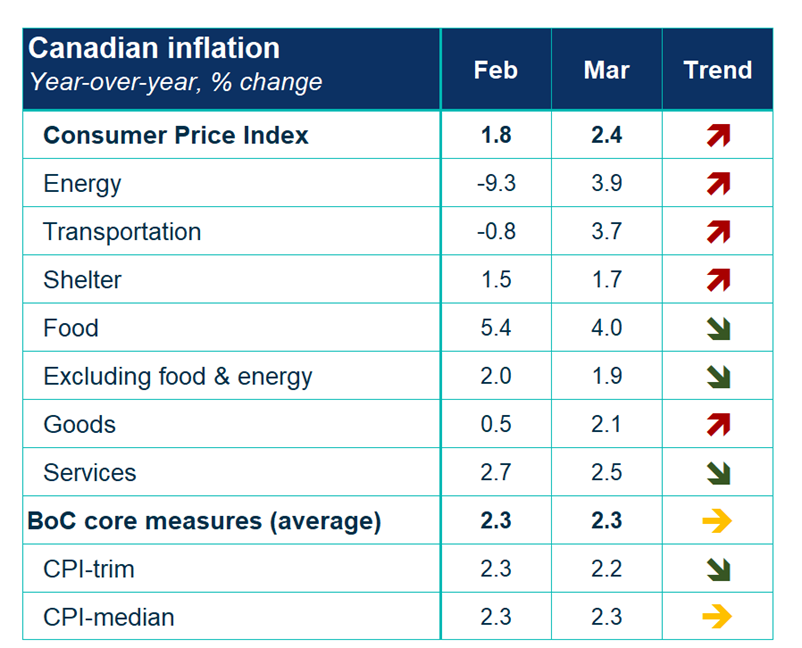
March 2026 inflation grew 2.4% year-over-year compared to 1.8% in February.

Andrew DiCapua
Share:




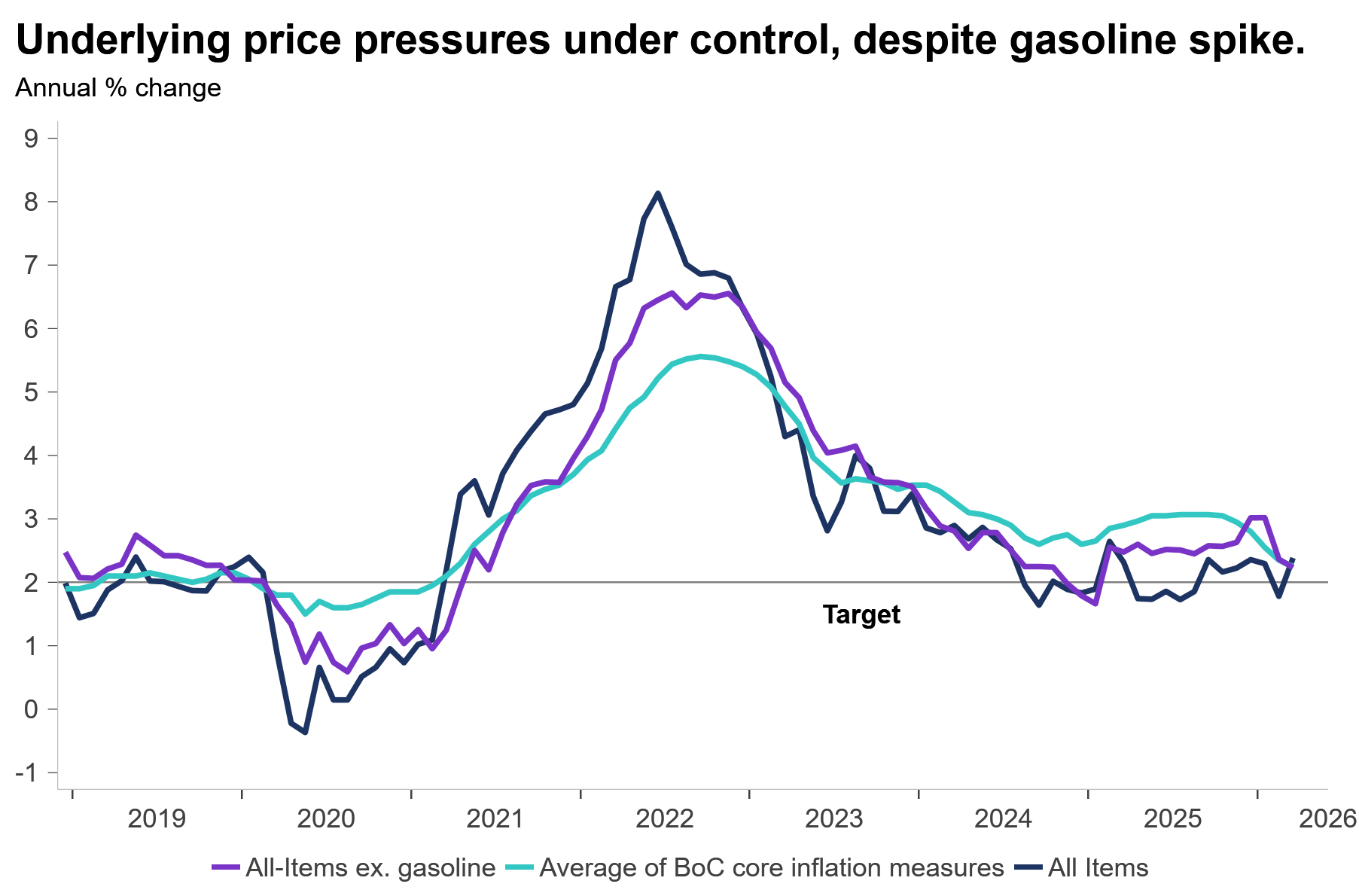
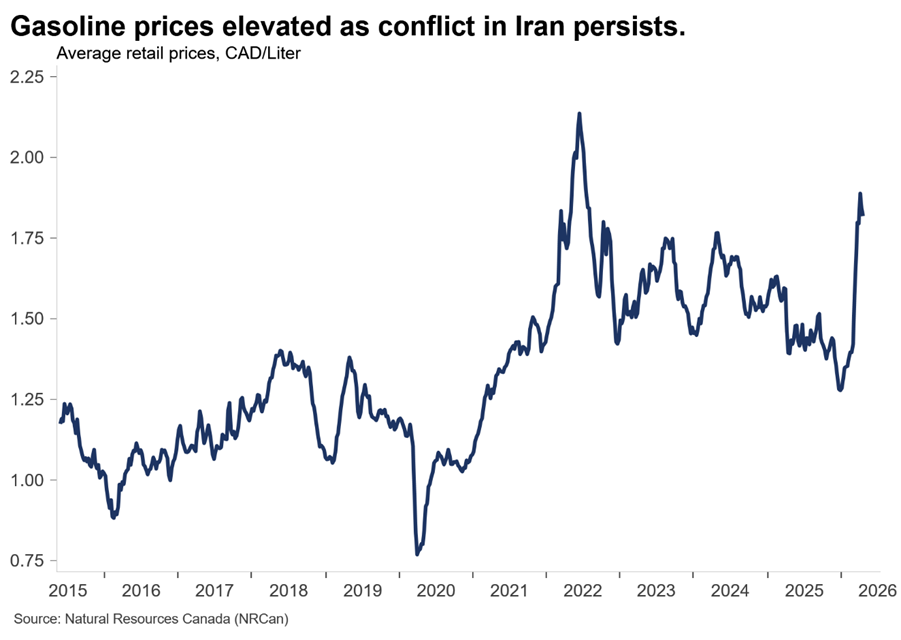
Inflation is starting to reflect the shock Canadians have been feeling at the gas pump. Higher energy prices were the main driver of upward pressure, even as some lingering base-year effects fade. The longer the conflict in Iran and the closure of the Strait of Hormuz continue, the more it will test Canadians’ patience and that risks pushing already elevated inflation expectations higher. That said, underlying price pressures aren’t a major concern for now, with CPI excluding gasoline slowing in March. We expect the Bank of Canada to hold at its next meeting, but the balance of risks is becoming more challenging with inflation risks tilting up.
Summary
CPI rose 2.4% year over year in March, up from 1.8% in February. The increase in headline inflation was largely driven by a sharp rise in energy prices, specifically gasoline. While the effects from the end of GST/HST break put downward pressure, food purchased from stores rose in March.
Adjusting for indirect taxes, CPI rose nearly 3% in March. Prices increased 0.9% on a monthly basis, with gasoline driving the momentum.
Gasoline prices rose nearly 6% year-over-year in March, less than we expected but still surged 21% on a monthly basis—the largest monthly increase on record. Gasoline directly added 0.22 percentage points to headline inflation, with natural gas prices offsetting some of the increase (-18%).
Food prices slowed to 4% in March, down from 5.4% in February. This category was affected by the GST/HST break and these effects faded in March. Grocery prices accelerated 4.4% in March, up from 4.1% in February, as fresh vegetables continue to see strong price movement. Restaurant prices eased in March to 3.2%, mostly on base-year effects. We’ll need to monitor the closure of the Strait of Hormuz, which accounts for 20% of nitrogen-based fertilizers, and could impact food prices going forward.
The Bank of Canada’s core inflation measures also improved, with the average of CPI trim and CPI median holding at 2.3% growth. Inflation momentum, measured by the three-month annualized growth rate, rose to 1.6%, still well-below the 2% inflation target.
Inflation increased in all provinces, with Atlantic Canada provinces experiencing the largest increase in March.
Implications
Higher gasoline prices will add to Canadians’ cost-of-living over the next few months as the conflict in Iran persists. Ultimately the higher energy prices will support the Canadian economy as a net energy exporter, but higher costs could hit household spending. Already elevated Inflation expectations could risk a further rise, as the “transitory” shock becomes more entrenched. The Bank of Canada will sit idle for now as the labour market moderates and broad-based measures of inflation are flat.
Charts
Other Blogs

Canada Needs More Than “Steady”: Key Findings from Business Insights Quarterly (Q1 2026)

Falling employment masks a deeper worry, with full-time jobs being replaced by part-time work: Labour Force Survey April 2025
Price-Driven Surge Pushes Canada Back into Surplus: Merchandise Trade March 2026

Canada’s economy on pace to rebound in the first quarter

The Bank of Canada sees current interest rate “appropriate” despite energy shock.
Use it while you can: The federal government spends its growth-driven fiscal windfall

A Solid Start, but Signs of Fatigue Emerging: Retail Sales February 2026

Sticky hiring, but wage growth at its highest since 2024: Labour Force Survey March 2025