






CPI February 2026
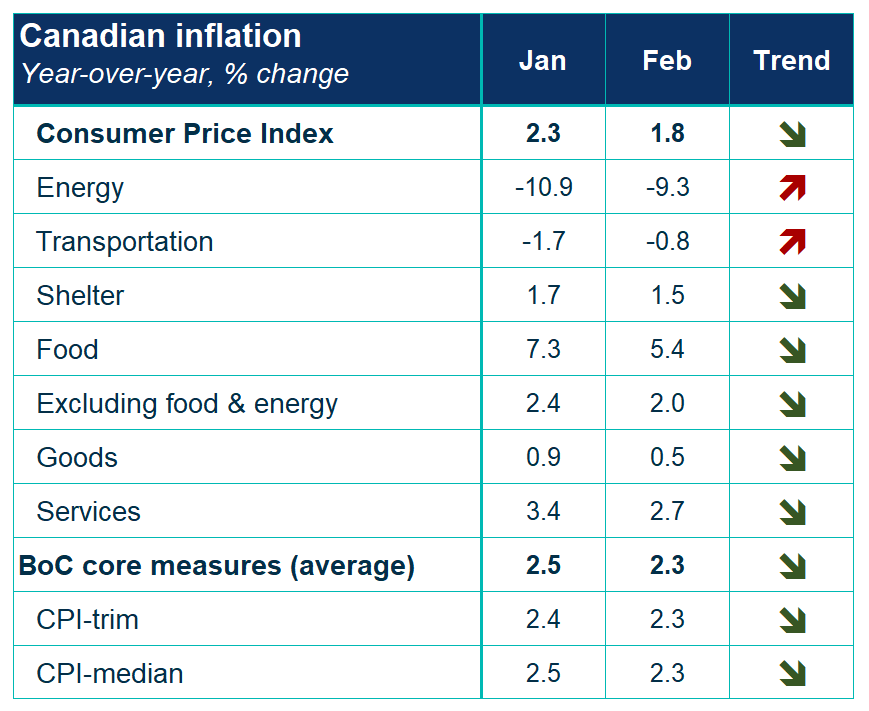
February 2026 inflation cooled to 1.8% annual growth compared to 2.3% in January.

Andrew DiCapua
Share:




February is the dip before the spike. There are some encouraging details in the inflation data, with broad-based price pressures easing, particularly in services and in core measures that look past the distortions from last year’s GST/HST break. But the picture will not stay this calm for long. Rising tensions in Iran have pushed gasoline prices higher in recent weeks, and that’s likely to show up in the next inflation print. For the Bank of Canada, the signals remain mixed with jobs data and inflation pulling them in different directions. That uncertainty for now will likely keep the Bank on hold at this week’s meeting as it waits for a clearer picture.
Summary
CPI rose 1.8% year over year in February, down from 2.3% in January. The decline in headline inflation was largely driven by partial base year effects from the GST/HST break, with food items and alcoholic beverages dropping out. This was partly offset by gasoline prices declining less than in January.
Adjusting for indirect taxes, CPI rose 1.9% in February, marking an improvement when temporary factors are excluded. Still, prices increased 0.5% on a monthly basis, with gasoline driving the momentum.
Food prices rose 5.4% year over year, down from 7.3% in January. Despite the GST/HST break remaining in effect until February 15, 2025, food prices declined, led by food purchased from restaurants, which eased to 7.8% from 12.3%.
Gasoline prices fell nearly 14% year over year in February, less than the 17% decline in January, providing a small positive contribution to headline inflation. However, on a monthly basis gasoline prices rose 3.6% as the conflict in Iran began in late February.
The Bank of Canada’s core inflation measures improved, with the average of CPI trim and CPI median easing to 2.3% from 2.5%. Inflation momentum, measured by the three month annualized growth rate, has slowed to just 1%, reinforcing that inflationary pressures are easing.
Inflation slowed in all provinces, with Ontario and Atlantic Canada experiencing the largest impact from the GST break.
Implications
Gasoline prices have risen about 30 cents per litre since December due to supply disruptions and heightened uncertainty from the war in Iran. Prices at the pump are about $1.63 per litre, roughly similar to a year ago, but gasoline will likely become a net contributor to inflation next month, bringing headline inflation back above 2%. The Bank of Canada will likely look through this at this week’s meeting, but it will need to consider how this supply disruption could affect the global outlook, key commodity prices, and Canada’s energy sector if the conflict lasts longer than expected.
Source: Statistics Canada
Other Blogs

Volatile Imports Drive Wider Deficit Despite Export Rebound: Merchandise Trade February 2026
January 2026 GDP: Canada’s economy kicks off 2026 on decent footing

Strong Start to the Year, but Underlying Momentum Remains Fragile: Retail Sales January 2026
Bank of Canada holds interest rates on cloudy conditions downplaying oil price risk to inflation

Labour market softens as job losses mount and youth unemployment climbs: Labour Force Survey February 2025
Auto Shutdowns Reverse Canada’s Export Momentum: Merchandise Trade January 2026
Inventory drawdown causes GDP to knee jerk into contraction despite improving fundamentals.

Momentum stalls as consumer shifts into a lower gear: Retail Sales December 2025