






Blog /
Another consensus-beating win for Canada: Labour Force Survey November 2025
Meeting seasonal demands translates into big employment gains for young workers but not full-time.


Anupriya Gangopadhyay
Share:




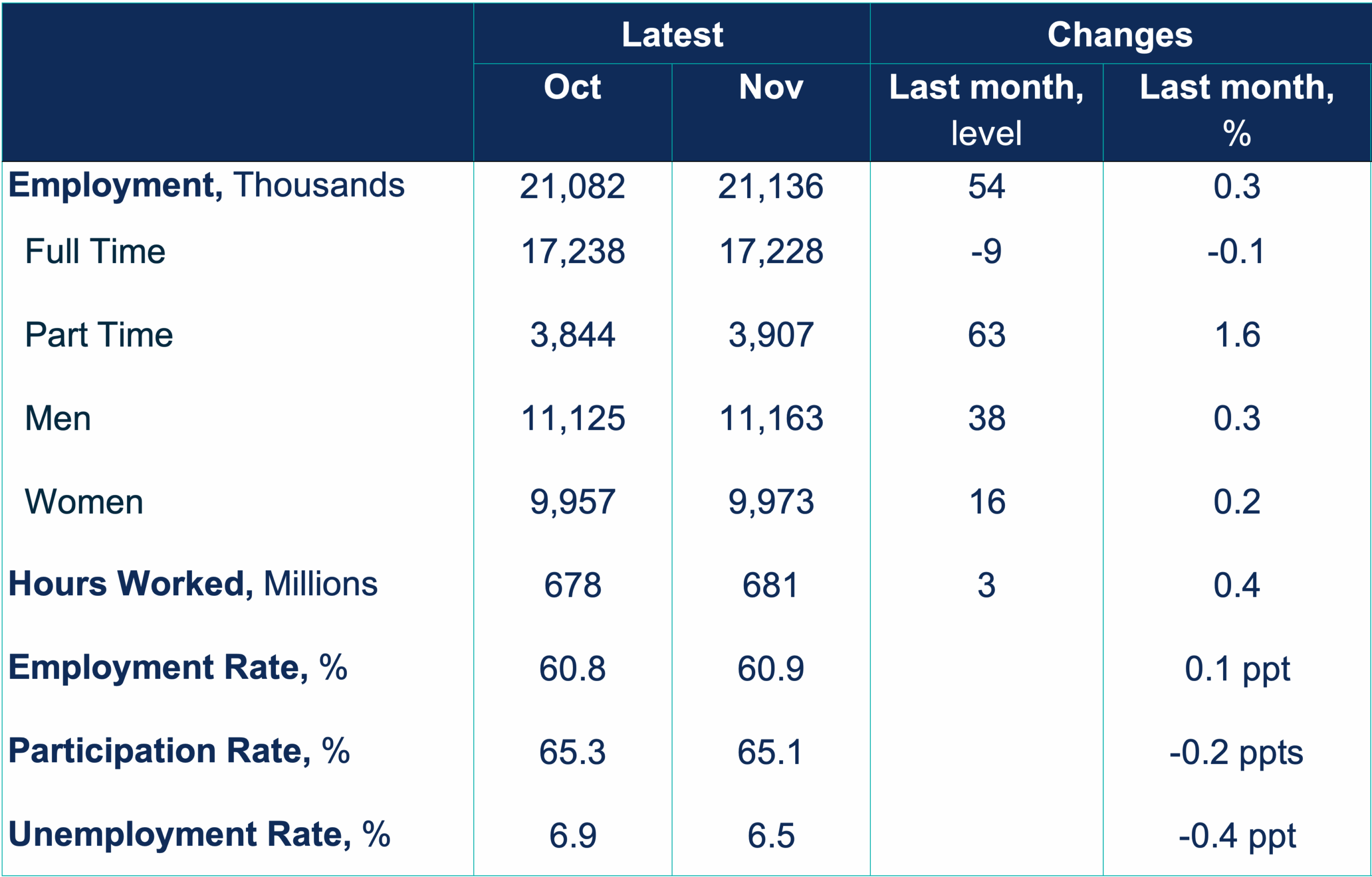
November’s labour report once again beat forecasts, marking a third straight month of job gains (+54,000 m/m) and nudging the unemployment rate down to 6.5%. Much of this growth, however, came from part-time positions and was concentrated among youth — a trend consistent with seasonal hiring as we approach the holidays.
As we head toward the final policy rate decision of 2025, the string of solid data on growth, jobs, and inflation signals that the next rate cut will likely be pushed into the new year.
KEY TAKEAWAYS
- Employment Levels: Adding to the gains in September and October, net total employment in November is up by 142,000 (+0.7% ytd) from January 2025. In November alone, 54,000 jobs were added, bringing the three-month cumulative increase to 181,000.
- Unemployment and Participation Rates: November recorded the sharpest decline in the unemployment rate this year, falling 0.4 percentage points m/m to 6.5%. Despite the rise in employment, stricter immigration policies—particularly those affecting temporary foreign workers—reduced the size of the labour force by 21,000. This, in turn, pushed the participation rate down by 0.2 percentage points to 65.1%.
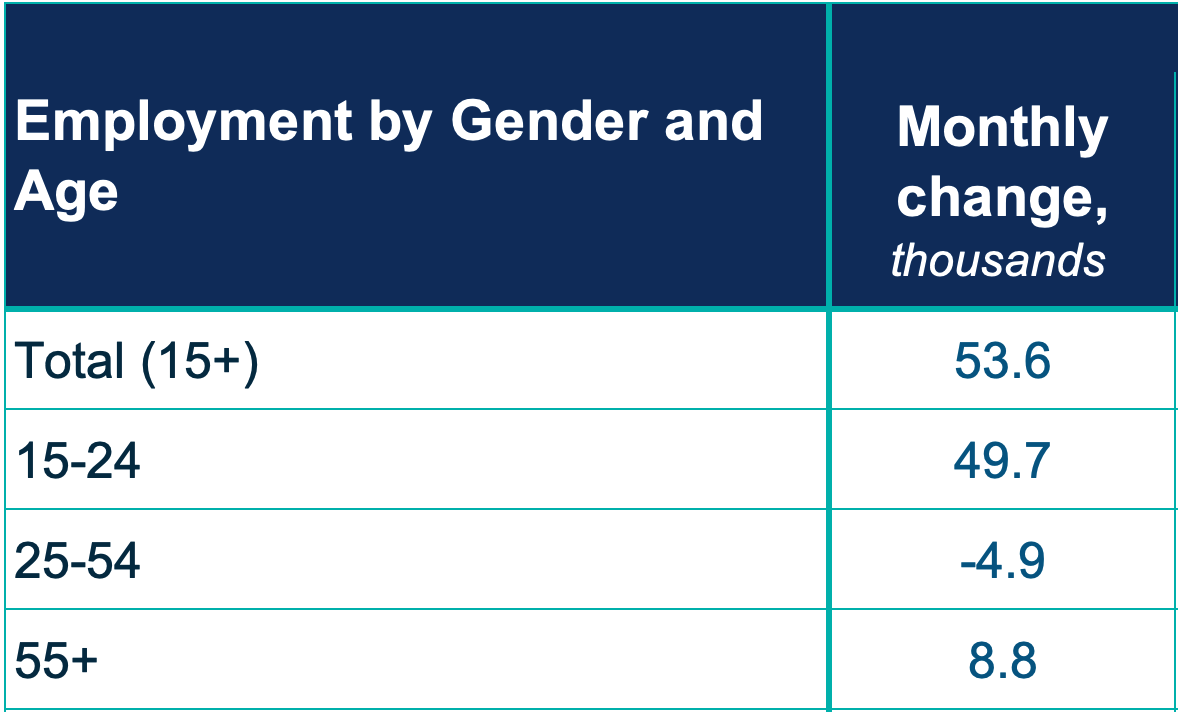
- Demographics and Job Types: Young workers once again accounted for the majority (92%) of November’s employment gains, adding 50,000 positions (+1.8%). The youth unemployment rate fell by 1.3 percentage points to 12.8%, the lowest level of 2025. However, these gains were exclusively in part-time roles. Full-time employment declined by 9,000 from the previous month, with little to no change in employment levels among core-aged and older workers. Although the unemployment rate for core-aged workers edged down by 0.2 percentage points, this was driven not by employment growth but by a reduction in the labour force, again linked to strict immigration controls.
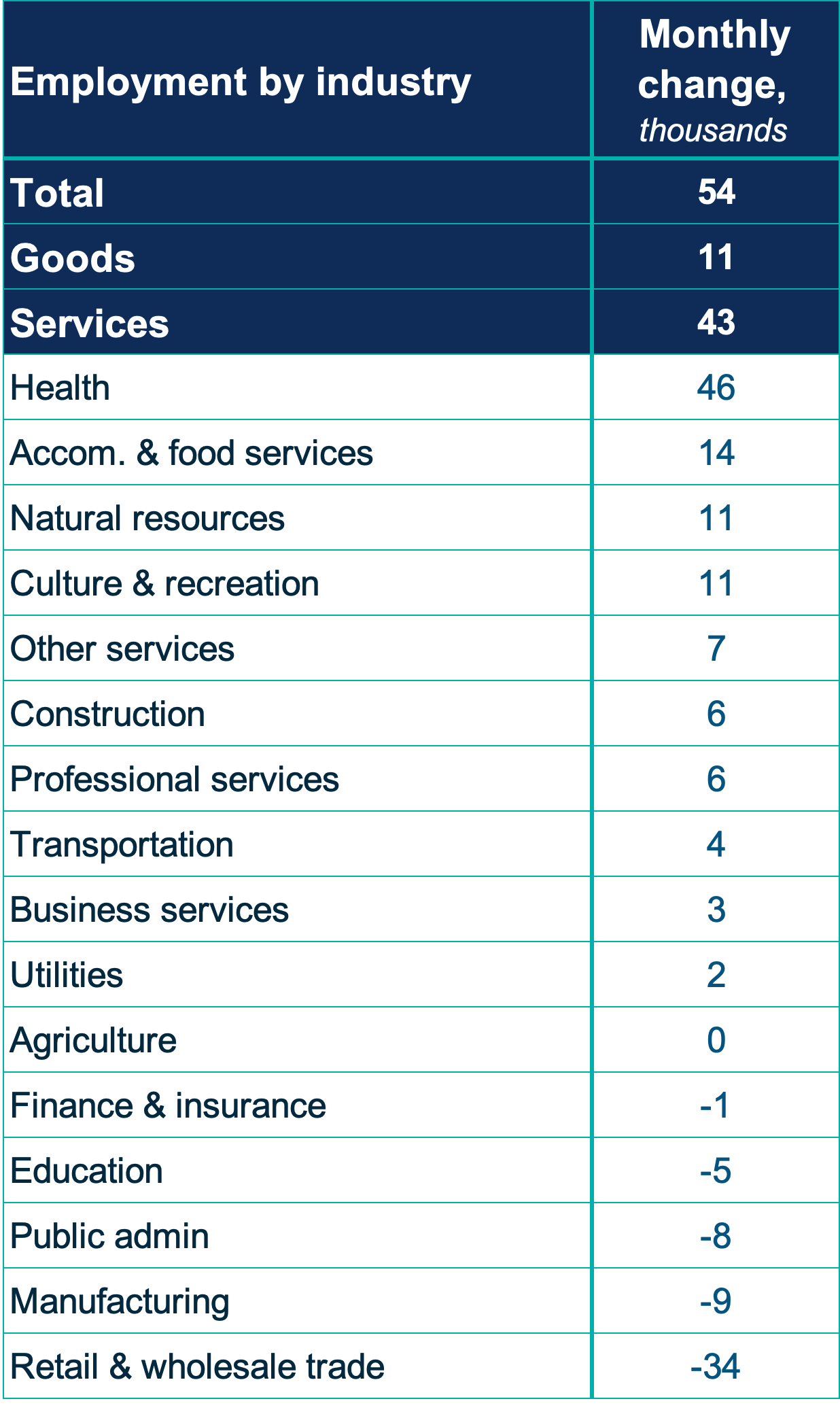
- Sectoral Breakdown: Both goods-producing and services-producing sectors posted employment increases, though the gains were much stronger in services (+43,000) than in goods (+11,000). Year-to-date, employment in goods-producing industries is up 2.9% (seasonally unadjusted), compared with 2% growth in services-producing industries. By sector, health care and social assistance recorded the largest monthly increase, adding 46,000 jobs (+1.6% m/m), followed by accommodation and food services (+14,000) and the natural resources sector (+11,000).
- Provincial Trends: Alberta accounted for nearly 53% of total job growth in November (+29,000) and consequently saw a sharp decline in its unemployment rate, dropping to 6.5% — the lowest since April 2024. New Brunswick and Manitoba also posted modest employment gains (+5,500 and +4,500, respectively).
TABLES
Other Blogs

Inventory drawdown causes GDP to knee jerk into contraction despite improving fundamentals.

Momentum stalls as consumer shifts into a lower gear: Retail Sales December 2025

Diversification Gains Traction as Exports Close the Year Stronger: Merchandise Trade December 2025

6 Predictions for the Canadian Economy in 2026

Conflicting signals as both unemployment and employment rate declines: Labour Force Survey December 2025

Canada’s Productivity Gap Is a Vulnerability We Must Fix

Weak economic momentum could spell fourth quarter contraction.

Gold Payback and Auto Tariffs Push Canada Back into Deficit: Merchandise Trade November 2025