








Canada’s Economy Is Fragile
Key Findings from Business Insights Quarterly (Q4 2025)

Business Data Lab
Share:




Canada avoided a technical recession in Q4, but growth is running on fumes as consumer spending and business investment stall.
Amidst uncertainty and a stagnant economy (despite somewhat upbeat GDP headlines), businesses are adapting — cautiously. Trade-exposed firms are shifting into “wait-and-see” mode. Most firms, especially smaller ones, have not taken meaningful action beyond price adjustments, suggesting that diversification and investment decisions may still be delayed until policy clarity improves. Meanwhile, AI adoption is rising, but the data suggests we’re moving in the slow lane.
Business Outlook
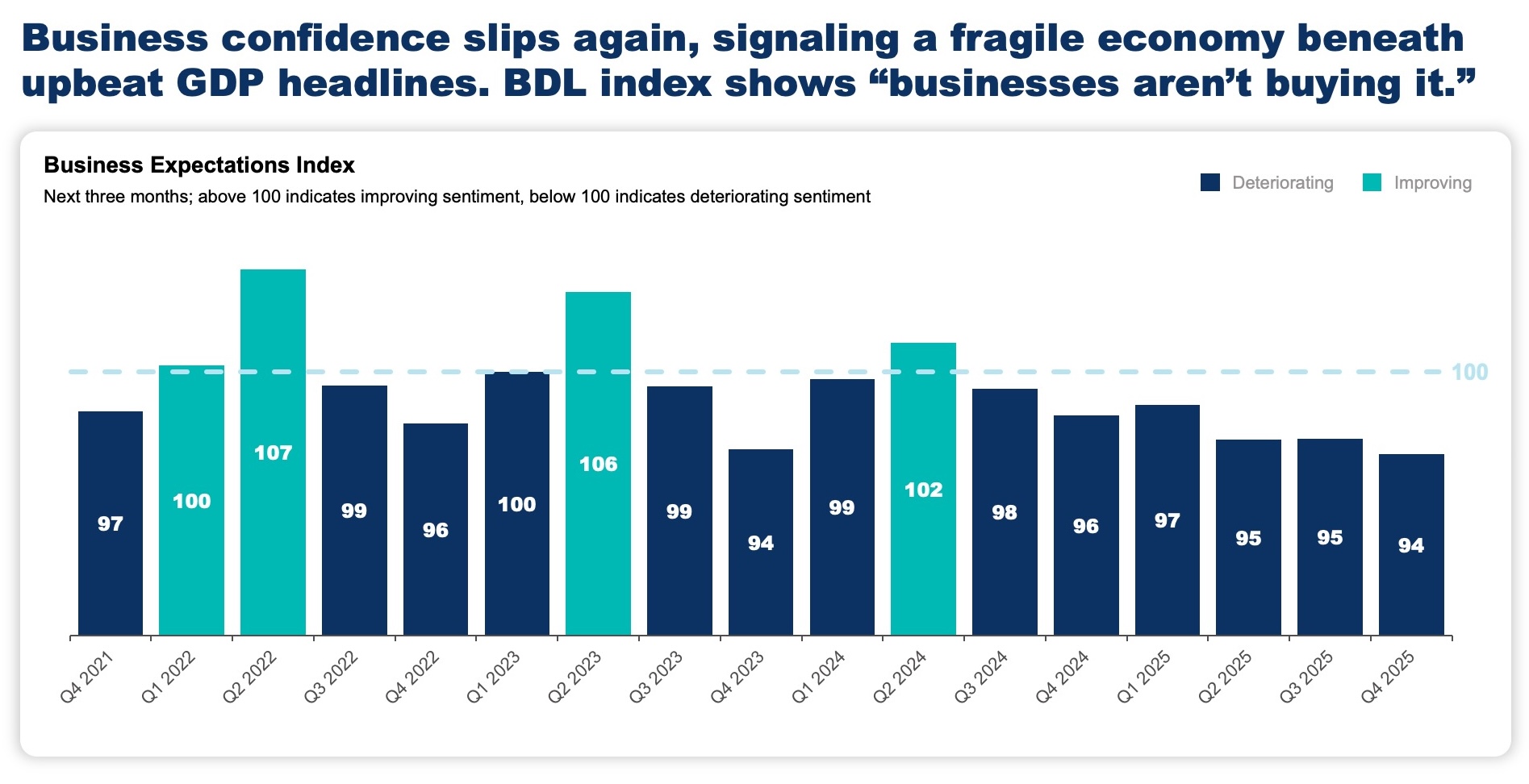
Business confidence slipped again, signalling a fragile economy. Sentiment among goods and services exporters also dipped.
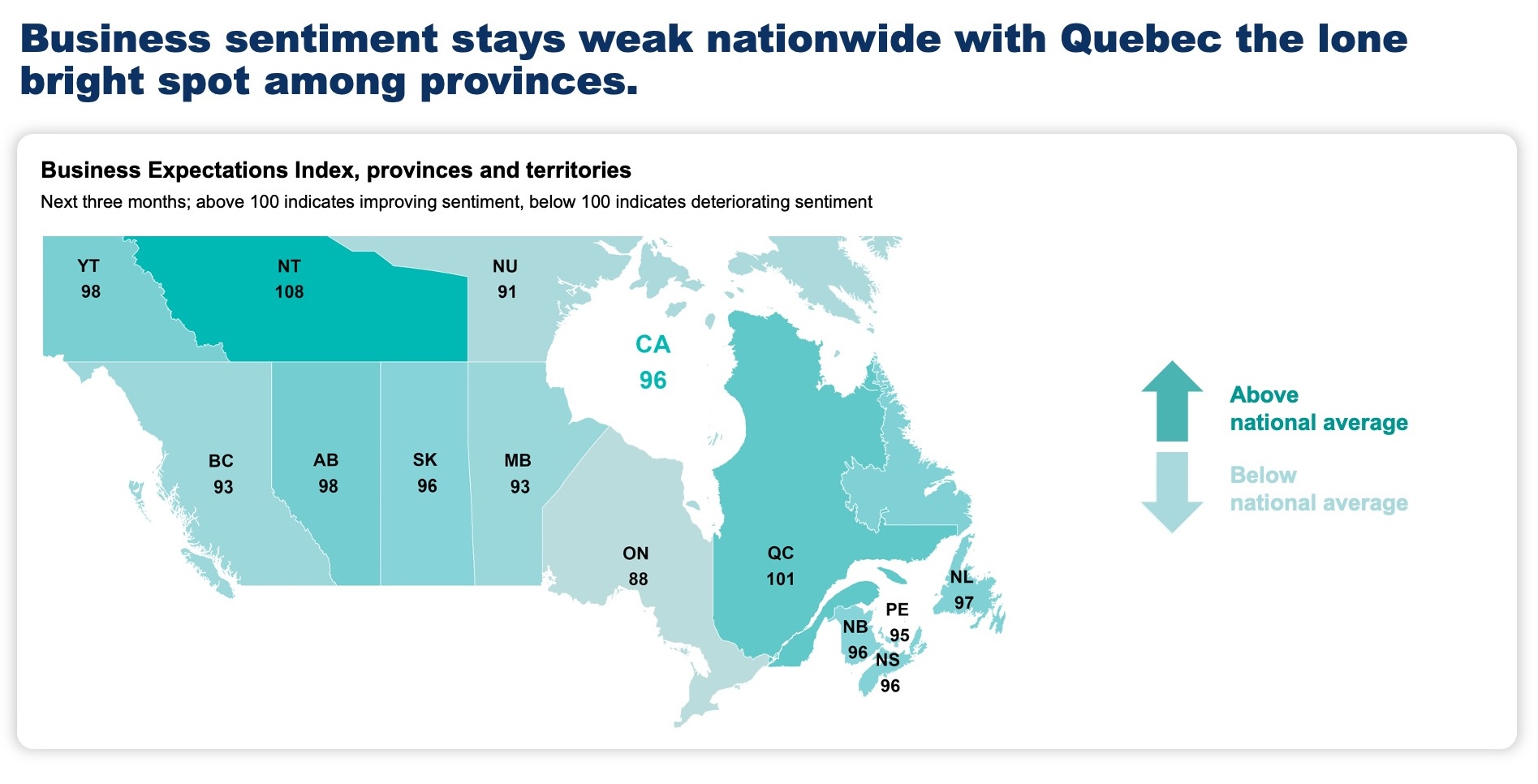
Business sentiment is the weakest in Ontario, and year-over-year, sentiment dropped the most along Ontario’s trade corridor compared to the rest of Canada.
Labour Market
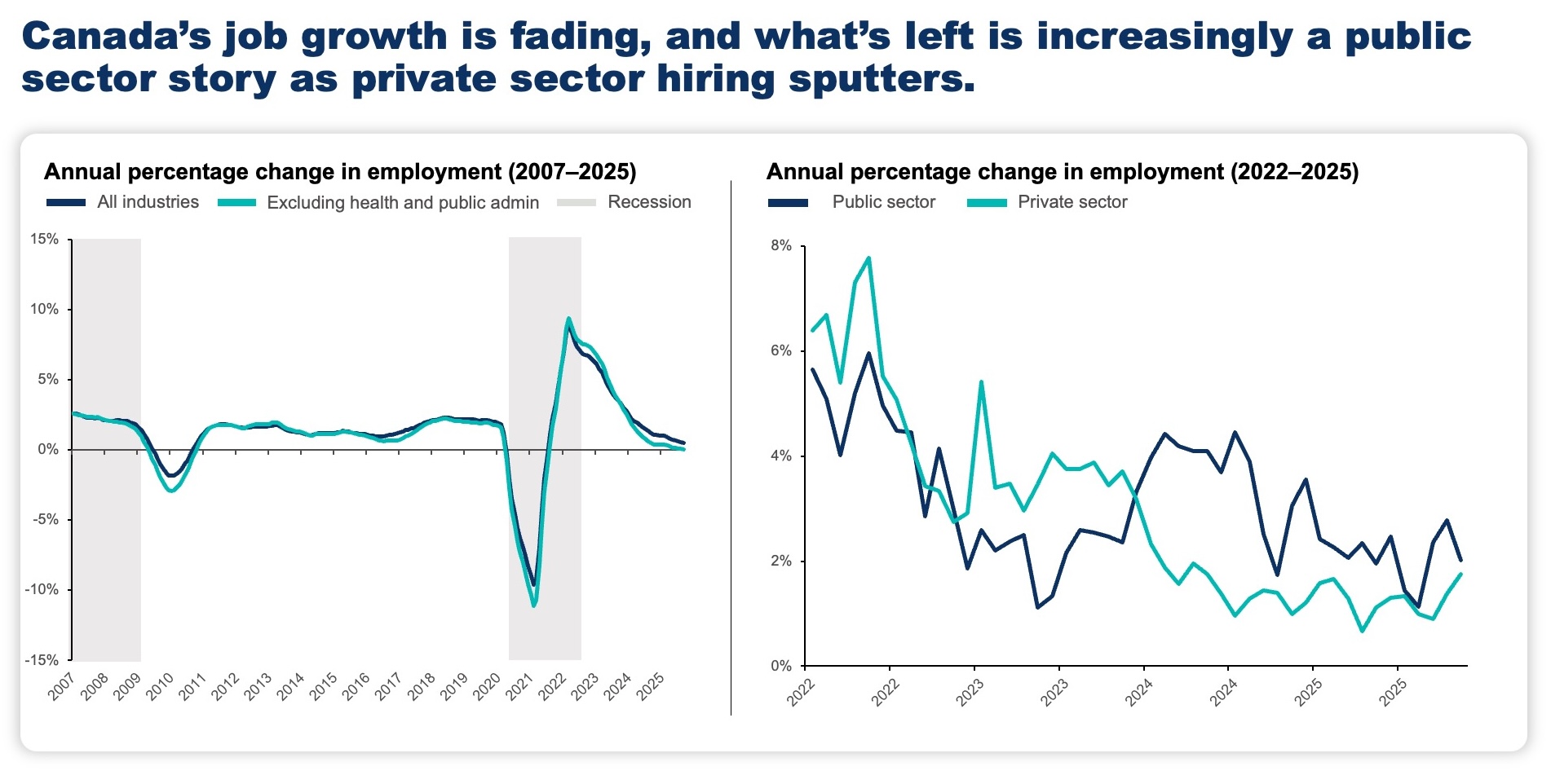
Canada’s job growth is fading. Headline job gains may not accurately represent underlying business momentum, especially since hiring in the private sector has slowed sharply, with most recent gains coming from the public sector.
AI Adoption
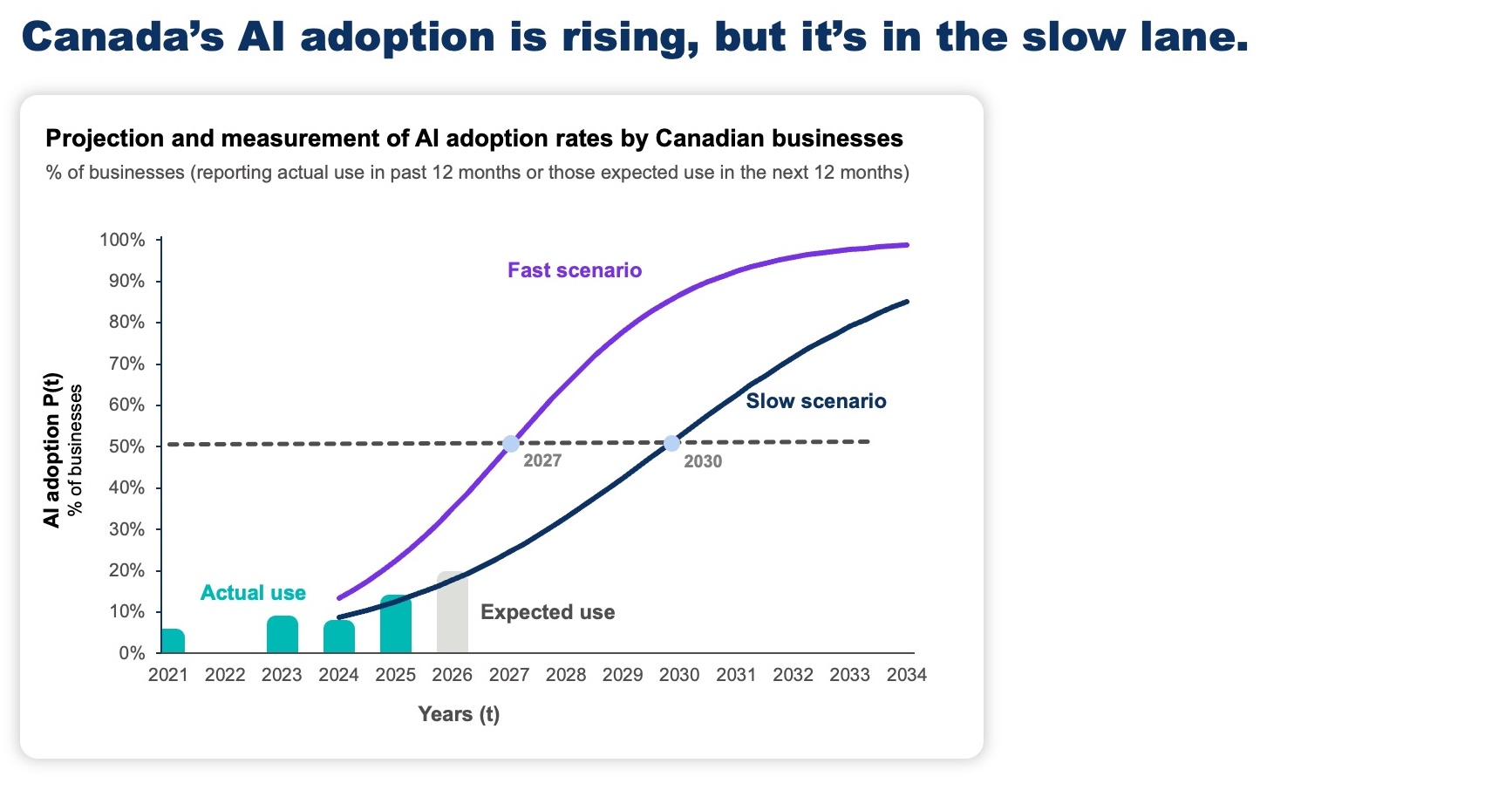
In 2024, BDL projected that AI adoption by Canadian businesses would reach a tipping point of 50% within the next three to six years, based on a fast or slow adoption rate. According to 2025 Statistics Canada data, adoption appears to be following BDL’s slow adoption rate projection.
AI is changing how firms work — not how many people they employ. Of the businesses reporting using AI in the last year, 40% say they’ve used it to develop new works flows, 39% have trained current staff to use AI, and 19% have changed data collection or data management practices. Most businesses (89%) have said that AI adoption did not change total employment and only 5% of businesses say that AI has reduced tasks performed by employees to a large extent.
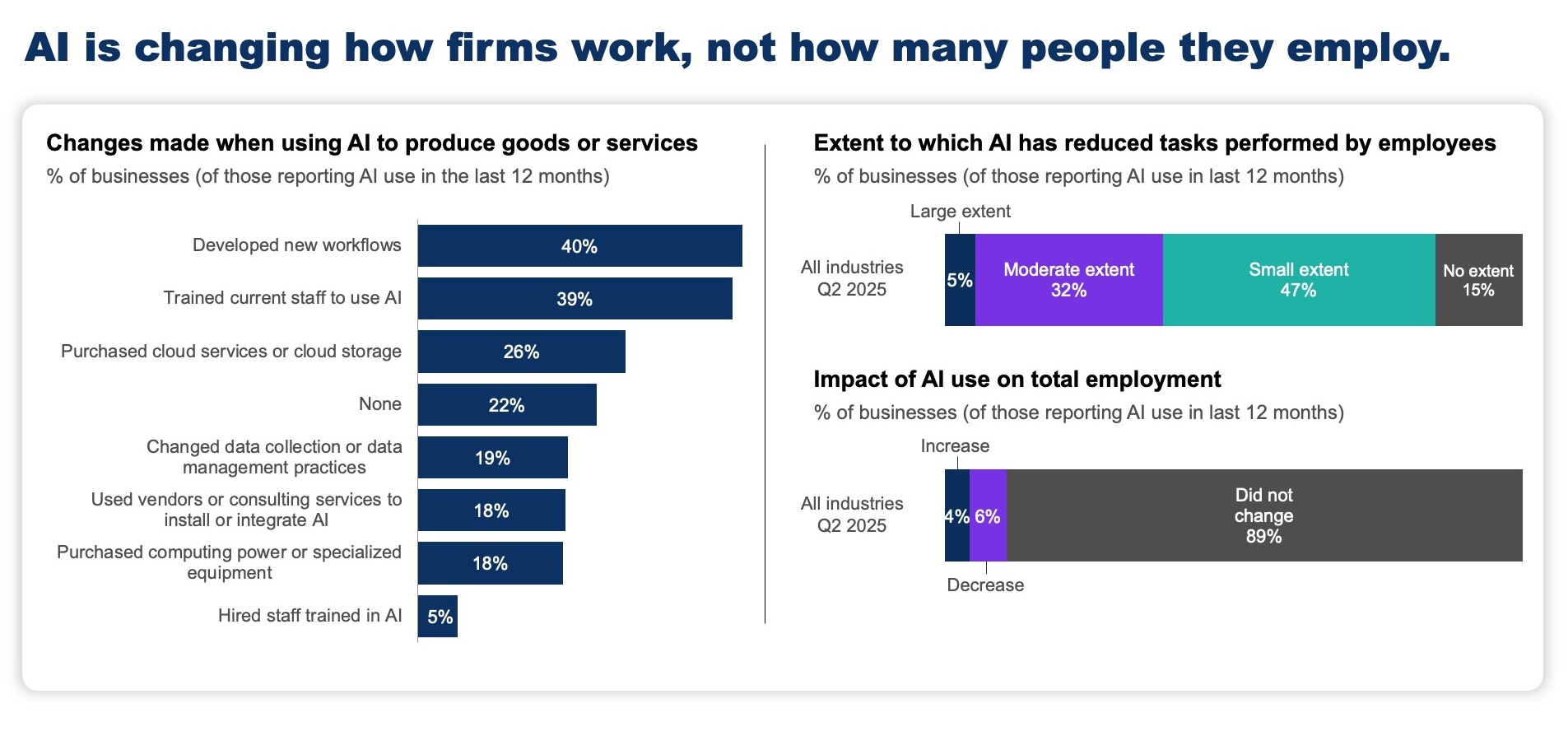
AI up doesn’t equal jobs down. Employment shifts are shaped by industry dynamics, not AI adoption alone.
SMEs
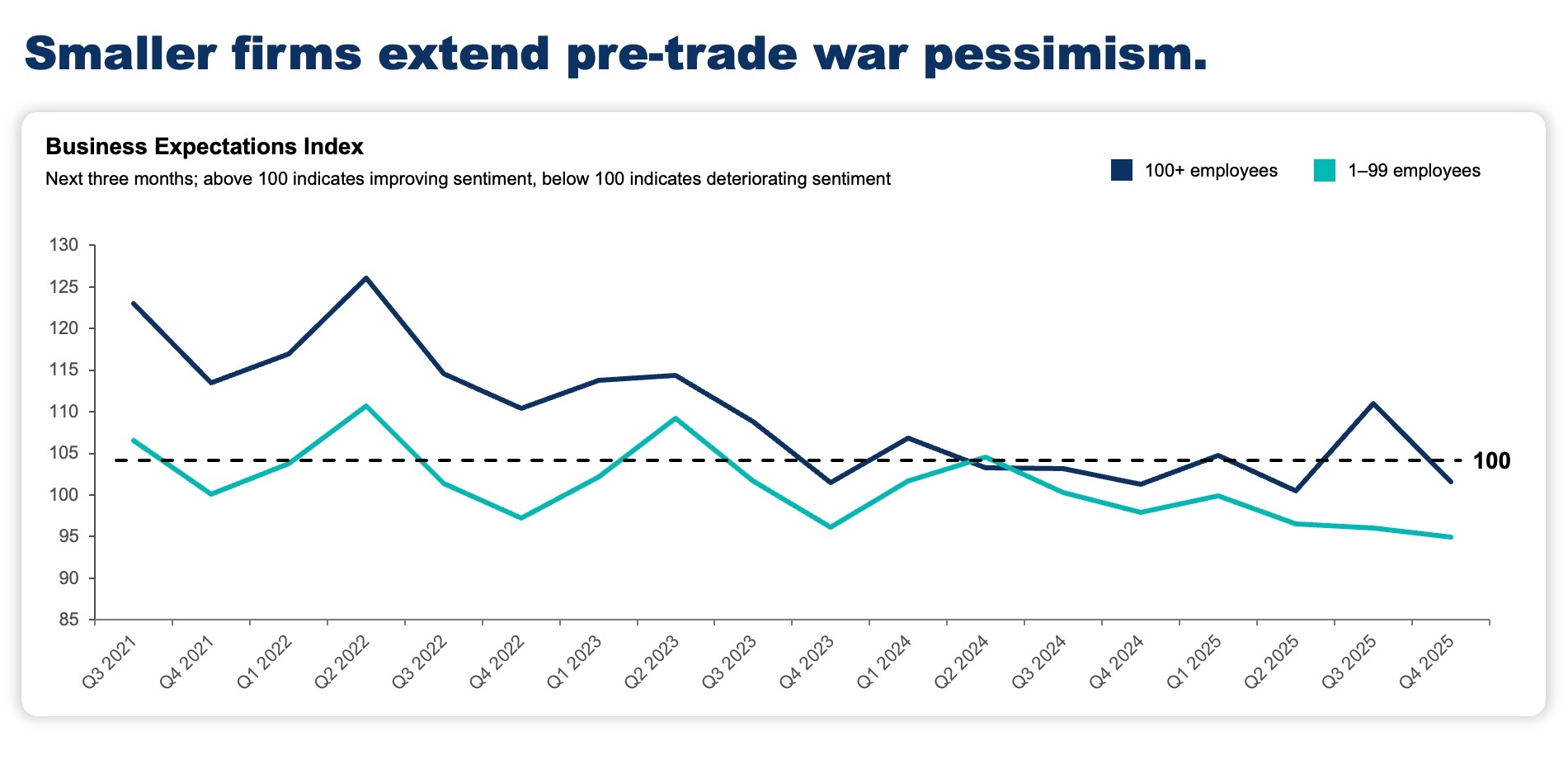
Smaller firms with 1–99 employees are less optimistic than businesses with 100+ employees.
Jobs
Despite SMEs making up most of the workforce, larger firms account for most recent job gains.
Trade
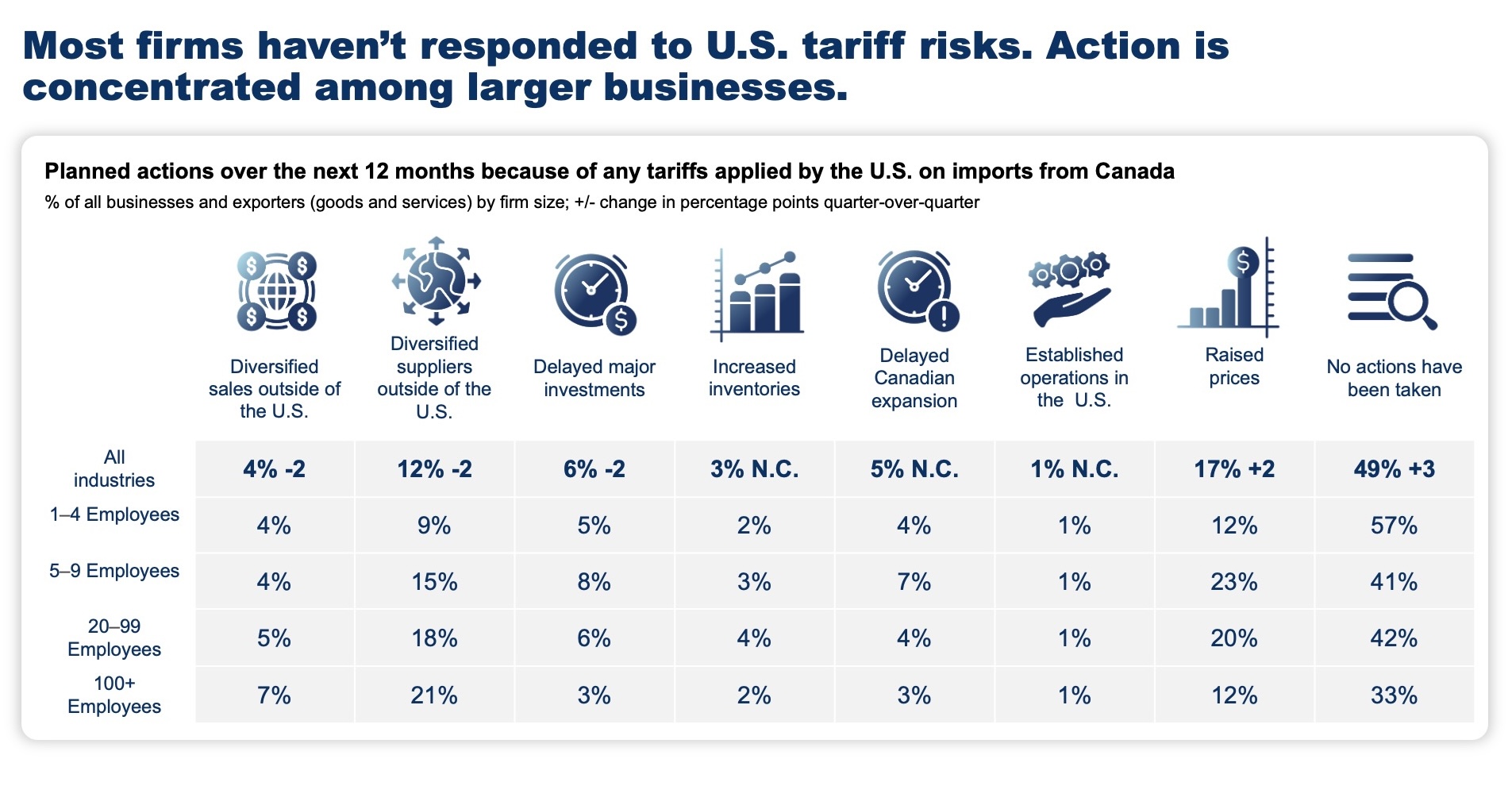
“No action taken” is the most common response to U.S. tariff risks, especially among smaller firms. However, some smaller firms have acted by:
Diversifying suppliers
- 15% of firms with 5–9 employees
- 18% of firms with 20–99 employees
Raising prices
- 23% of firms with 5–9 employees
- 20% of firms with 20–99 employees
Other Blogs

Strong Start to the Year, but Underlying Momentum Remains Fragile: Retail Sales January 2026

Bank of Canada holds interest rates on cloudy conditions downplaying oil price risk to inflation
The dip before the spike, as base effects bring inflation below 2%

Labour market softens as job losses mount and youth unemployment climbs: Labour Force Survey February 2025
Auto Shutdowns Reverse Canada’s Export Momentum: Merchandise Trade January 2026
Inventory drawdown causes GDP to knee jerk into contraction despite improving fundamentals.

Momentum stalls as consumer shifts into a lower gear: Retail Sales December 2025

Diversification Gains Traction as Exports Close the Year Stronger: Merchandise Trade December 2025