







Canada’s economy kicks off 2026 on decent footing
GDP January 2026

Andrew DiCapua
Share:




The Canadian economy is starting to show some signs of life early in 2026. A rebound in oil and gas, along with solid momentum in residential construction, is giving us a few pockets of optimism. But it’s not a broad-based recovery with manufacturing at its weakest point in more than five years, driven by an auto sector under pressure. Overall, growth is still uneven and likely to remain that way this year, especially with windfalls from higher oil prices beginning in February. Early indicators suggest first-quarter growth will come in close to the Bank of Canada’s forecast, reinforcing the view that interest rates will likely stay where they are for now.
Summary
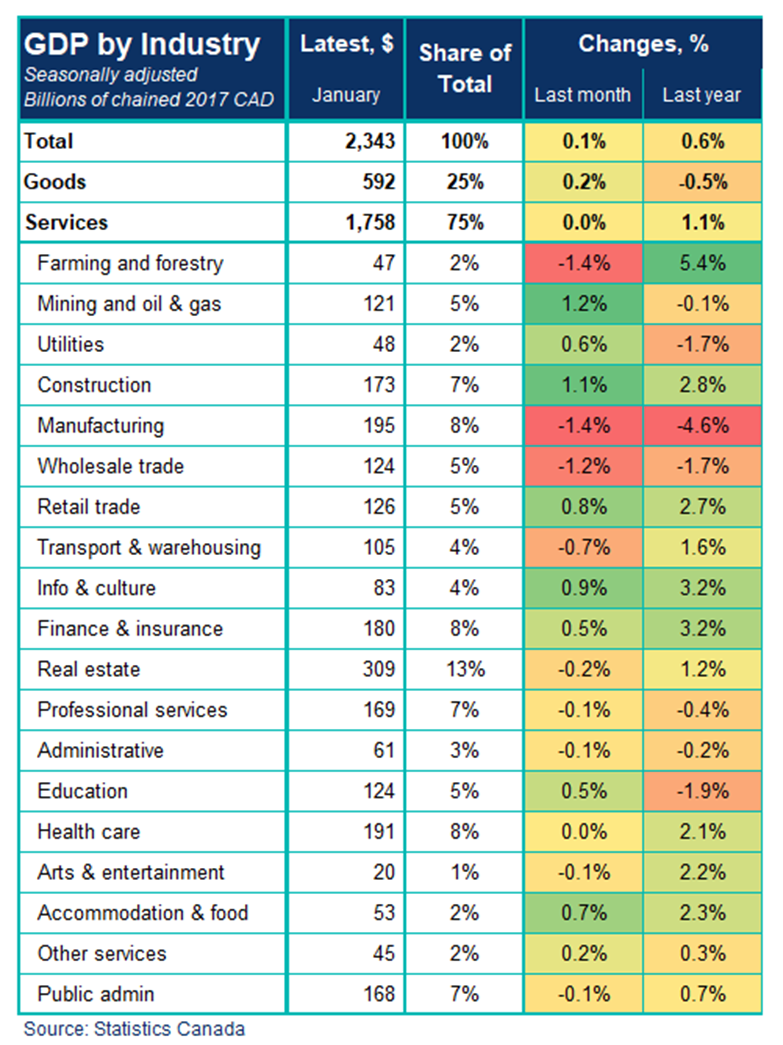
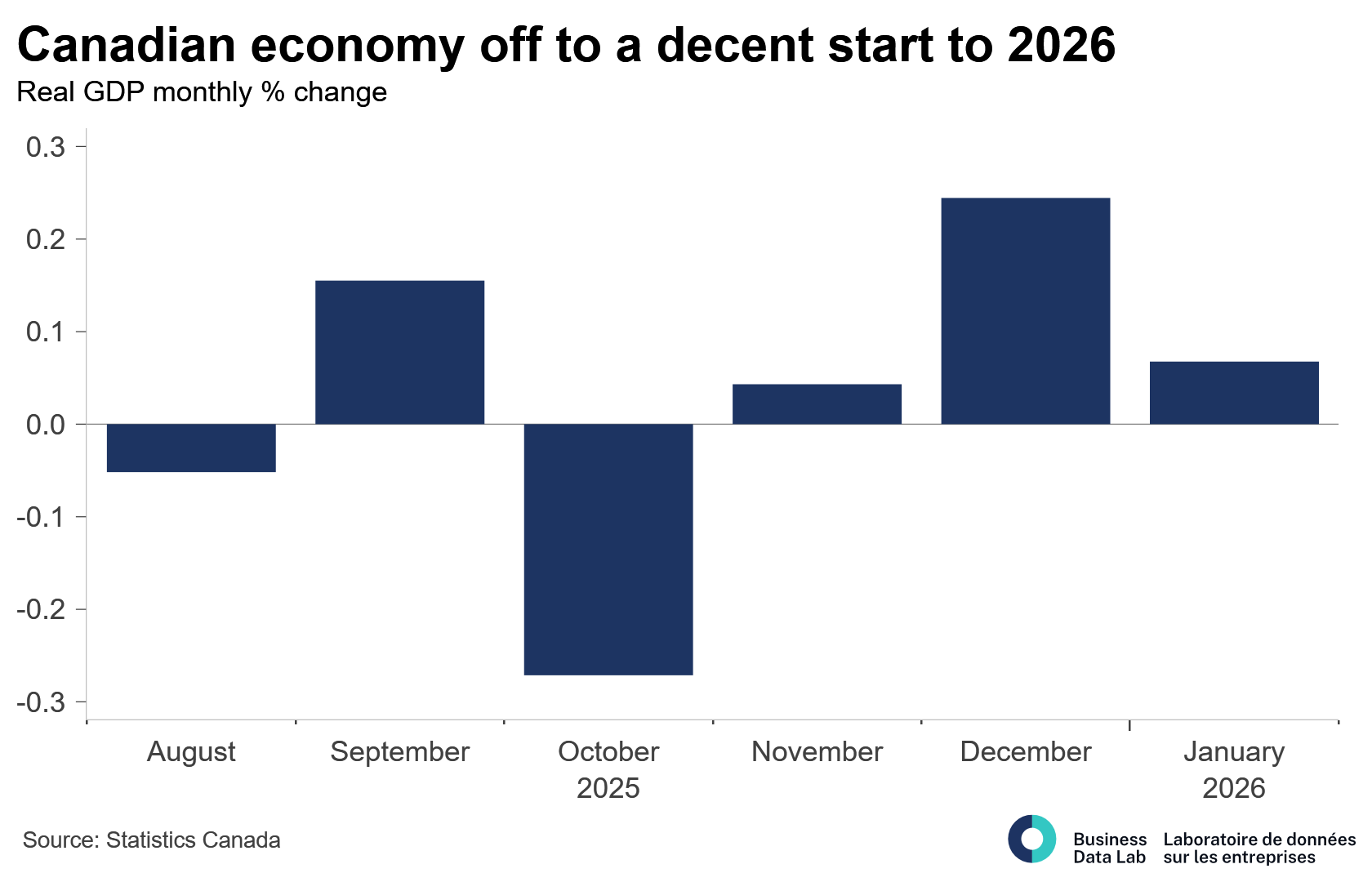
Real GDP accelerated by 0.1% in January providing some signs that the Canadian economy is building some momentum following a 0.2% growth in December. Goods-producing sectors expanded in January by 0.2% for the second month in a row while services were flat. The momentum in goods-producing sectors occurred alongside continued weakness in manufacturing with durable goods (autos) carrying most of the decline. Statistics Canada is expecting GDP to grow by 0.2% in February.
Mining, oil and gas extraction led monthly economic activity, accelerating 1.2% on the month. Oil and gas extraction expanded 1.6%, led by increased extraction in Saskatchewan and Newfoundland and Labrador. We should expect to see some windfall from higher oil prices due to the war conflict in the Middle East.
The manufacturing sector contracted by 1.4% in January following an increase in December. Durable goods sectors have been supressed for the last three of four months. The autos sector, which led the manufacturing decline in January, posted its largest decline since September 2021, due to longer-than-expected holiday shutdowns. Early signals from February surveys indicate a rebound in sector activity.
An acceleration in construction activity by 1.1% is encouraging with all subsectors expanding. Although the home resale market remains muted, recent momentum in residential construction and housing improvements could support further activity later in the year.
Retail trade expanded by 0.8% in January with internal BDL data suggesting that consumer spending will remain resilient consistent with the flash estimate that sales increased again in February.
Implications
Statistics Canada’s flash estimate for January GDP is +0.2%, which would put the first quarter on track to grow 1.8% on an annualized basis. This is in line with the Bank of Canada’s projections in their latest January Monetary Policy Report. BDL’s nowcast is tracking a more pessimistic picture, forecasting -0.4% growth. Despite some positive signs, uneven sector performance is likely to continue this year. All together, the Bank of Canada will see the economy growing as expected, which will keep interest rates steady.
Source: Statistics Canada
Other Blogs

Strong Start to the Year, but Underlying Momentum Remains Fragile: Retail Sales January 2026

Bank of Canada holds interest rates on cloudy conditions downplaying oil price risk to inflation
The dip before the spike, as base effects bring inflation below 2%

Labour market softens as job losses mount and youth unemployment climbs: Labour Force Survey February 2025

Auto Shutdowns Reverse Canada’s Export Momentum: Merchandise Trade January 2026
Inventory drawdown causes GDP to knee jerk into contraction despite improving fundamentals.

Momentum stalls as consumer shifts into a lower gear: Retail Sales December 2025

Diversification Gains Traction as Exports Close the Year Stronger: Merchandise Trade December 2025